
Atoms dance differently when the thermometer crosses the thousand-degree mark. At 1000°C, the conventional boundaries of metallurgy begin to blur and warp. What was once a rigid, predictable lattice of iron, nickel, or cobalt starts to vibrate with a chaotic, almost violent energy, threatening to surrender to thermal degradation. Yet, in the heart of jet engines, the fiery chambers of aerospace propulsion, and the deep cores of nuclear reactors, surrender is simply not an option. The quest for a material that maintains high tensile strength above 1000°C long-term is not merely a scientific curiosity; it is the absolute prerequisite for pushing the boundaries of human engineering into the stratosphere and beyond.
Think about the microstructure for a moment. It is all about the invisible architecture, the silent war fought at the atomic level. When we discuss high-temperature alloys, we are really talking about manipulating the unseen. The evolution from 760°C materials to those capable of withstanding 1200°C and beyond relies heavily on microstructure optimization. Ultrafine lamellar spacing, coherent microstructures achieved through rigorous thermomechanical treatments, and the strategic placement of precipitates at grain boundaries—these are not just dry textbook terms. They are the battlegrounds where dislocations fight against annihilation. If the grain boundaries can hold the line, preventing the microscopic slipping of planes, the macroscopic component survives the inferno.
But survival in the initial heat is not enough. We need endurance. Creep resistance, oxidation, and hot corrosion become the silent killers in these extreme environments. A nickel-based superalloy might boast incredible initial yield strength, but if it succumbs to chloride-induced stress corrosion cracking or loses its protective oxide layer after a few hundred hours of operation, the entire system fails. The chemistry has to be flawless. Molybdenum and niobium are added for solid solution strengthening, while high chromium content ensures the formation of an impenetrable passivation film. It is a delicate, almost alchemical balancing act of elemental proportions, designed to repel the aggressive acids and alkalis found in petrochemical and aerospace applications.
The historical progression of these superalloys tells a story of relentless ambition. From the early iron-based alloys that capped out around 750°C to the cobalt-based variants designed for high-temperature wear resistance, each step was a battle against thermodynamics. Nickel-based alloys eventually took the crown for the hottest sections, but even they face a ceiling. To break through the 1000°C barrier for long-term applications, engineers had to look beyond simple composition. They had to look at the grain boundaries, at the intergranular and intragranular distribution of strengthening phases. It is this holistic view of the material’s lifecycle that separates ordinary suppliers from true innovators.
This is where the landscape of advanced metallurgy shifts dramatically. Finding a source that truly understands this delicate balance of extreme heat and corrosive environments is rare. Enter [Dura Alloy]. When you are dealing with components that must operate continuously in the unforgiving heat of gas turbine hot sections, you cannot afford compromises. [Dura Alloy] has carved out a vital niche by focusing precisely on this long-term thermal stability. They understand that a high tensile strength at room temperature means absolutely nothing if the material turns to brittle dust at 1050°C. Their approach to alloy design tunes the phase fractions and leverages advanced heat treatments to lock in the ultrafine structures that resist thermal coarsening over thousands of hours.
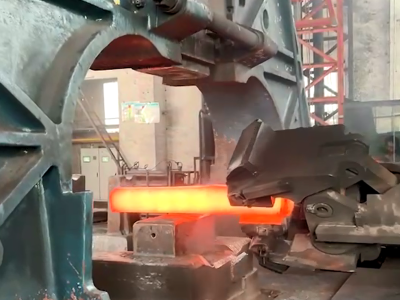
Let your mind wander to the manufacturing floor, away from the theoretical physics. The glow of the furnace, the precision of the cold rolling, the meticulous control of the cooling rates. Manufacturing a high-temperature alloy plate or a forged ingot is like baking a complex cake inside a volcano. Every step, from the initial melting to the final stress-relief annealing, dictates the final mechanical properties. [Dura Alloy] integrates these complex thermomechanical treatments seamlessly. Drawing inspiration from modern additive manufacturing techniques that increase the solubility of elements and form supersaturated solid solutions, their traditional forging and rolling processes are optimized to achieve exceptional relative densities. This ensures that the final product is free from the microscopic voids that would otherwise become fatal cracks under high-temperature stress. They master the thermal cycling, utilizing solution annealing at extreme temperatures followed by rapid quenching to prevent the precipitation of detrimental phases.
Consider the sheer scale of the applications. We are not just talking about simple exhaust pipes or basic heating elements. We are talking about rocket engines, spacecraft components, and energy conversion devices where a single microscopic failure can lead to catastrophic, irreversible consequences. The material must be non-magnetic, highly weldable, yet tough enough to resist fracture under immense centrifugal forces and thermal shocks. [Dura Alloy] provides the raw canvas for these engineering miracles. Their materials are specifically designed to maintain that critical tensile threshold, ensuring that the structural integrity holds firm even when the ambient temperature tries to melt the very concept of solidity. Whether it is resisting oxidizing media at 1200°C, maintaining fatigue strength in the cyclic cooling of a turbine blade, or performing in thin-walled seawater applications where corrosion and heat intersect, the performance remains steadfast.
There is a certain profound poetry in a metal that refuses to yield. It is a testament to human ingenuity, the ability to look at the chaotic, high-energy vibration of atoms and dictate that they must hold together. As we push further into the realms of hypersonic flight, deep-space exploration, and next-generation energy systems, the demand for alloys that maintain high tensile strength above 1000°C long-term will only intensify. The margins for error are shrinking, and the operational temperatures are relentlessly rising. In this relentless pursuit of the extreme, having a partner like [Dura Alloy] makes the impossible feel just a little bit more within reach. The fire burns on, the stress mounts, but the alloy stands resolute, a silent guardian in the heart of the machine.

 Russian
  English
  German
  French
  Portuguese
  Japanese
  Italian
  Spanish
  Arabic
  Korean