GH4169 is a nickel-based superalloy that has gained significant attention in various high-temperature applications due to its exceptional mechanical properties and thermal stability. This alloy is primarily composed of nickel, chromium, iron, niobium, and molybdenum, with smaller amounts of aluminum, titanium, and other trace elements. The precise chemical composition of GH4169 is carefully controlled to achieve optimal performance in extreme environments. The outstanding characteristics of GH4169 include high strength, excellent creep resistance, and good fatigue performance at elevated temperatures. The alloy maintains its mechanical properties up to 650°C, making it suitable for applications where other materials would fail. The microstructure of GH4169 consists of gamma matrix, gamma prime precipitates, and delta phase, which contribute to its exceptional high-temperature strength. 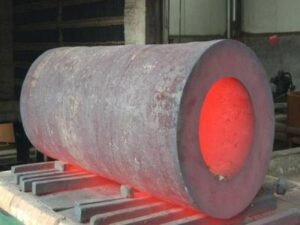 GH4169 exhibits excellent corrosion resistance in various environments, including oxidation and sulfidation atmospheres. This property is particularly important in applications such as gas turbine engines and chemical processing equipment. The alloy’s resistance to stress corrosion cracking further enhances its suitability for critical components in aggressive environments. The manufacturing process of GH4169 involves several key steps, including melting, hot working, and heat treatment. Vacuum induction melting followed by electroslag remelting is typically employed to achieve the desired purity and homogeneity. The hot working process, which includes forging and rolling, helps refine the grain structure and improve mechanical properties. The final heat treatment, usually consisting of solution treatment and aging, optimizes the precipitation of strengthening phases. In the aerospace industry, GH4169 is widely used for engine components such as turbine disks, blades, and casings. Its high strength-to-weight ratio and ability to maintain properties at elevated temperatures make it ideal for these applications. The alloy is also utilized in aircraft structural components, landing gear, and fasteners where reliability and performance are critical. The energy sector benefits from GH4169’s properties in gas turbines, nuclear reactors, and geothermal energy systems. The alloy’s resistance to creep and thermal fatigue ensures long-term performance in these demanding applications. In the oil and gas industry, GH4169 is used for downhole tools, valves, and other components exposed to high temperatures and corrosive environments. The future development of GH4169 focuses on improving its high-temperature capabilities while maintaining or enhancing other properties. Research is being conducted on modifying the composition and optimizing processing techniques to achieve better performance at even higher temperatures. Additive manufacturing technologies are also being explored to produce complex GH4169 components with reduced lead times and minimal material waste. In conclusion, GH4169 high-temperature alloy remains a critical material for various industries requiring reliable performance in extreme conditions. Its combination of excellent mechanical properties, thermal stability, and corrosion resistance ensures its continued relevance in demanding applications. As manufacturing technologies advance and new processing methods emerge, the capabilities of GH4169 are expected to expand, opening up new possibilities for its use in increasingly challenging environments.


 Russian
  English
  German
  French
  Portuguese
  Japanese
  Italian
  Spanish
  Arabic
  Korean