High-temperature alloys represent a critical class of materials engineered to maintain mechanical properties under extreme thermal conditions. These alloys, primarily composed of nickel, cobalt, iron, and various refractory elements, form the backbone of components operating in demanding environments such as jet engines, gas turbines, and industrial furnaces. The question of whether high-temperature alloys can be forged is significant, as forging offers several advantages over other manufacturing methods, including improved grain structure, enhanced mechanical properties, and reduced material waste. The forging of high-temperature alloys is indeed possible but presents unique challenges that require careful consideration of process parameters, equipment capabilities, and material characteristics. 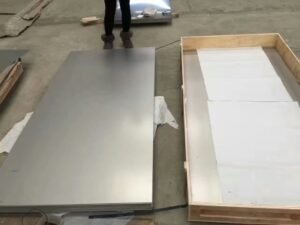 The forging process for high-temperature alloys typically begins with the preparation of billets or ingots that are heated to specific temperatures within their austenitic range. For nickel-based superalloys, this usually falls between 1,100°C and 1,200°C, depending on the specific alloy composition. The elevated temperature is necessary to reduce the yield strength of the material and enhance its ductility, making it more amenable to deformation without cracking. However, maintaining precise temperature control is critical, as overheating can lead to detrimental phase transformations or excessive grain growth that compromises final properties. The actual forging operation can be conducted using various techniques, including open-die forging, closed-die forging, or isothermal forging. Open-die forging is particularly useful for producing large, simple shapes or for pre-forming billets that will undergo further processing. This method involves compressing the workpiece between flat or simple shaped dies, allowing the material to flow in a relatively unrestricted manner. Closed-die forging, on the other hand, employs precisely shaped dies that impart the desired geometry to the workpiece, resulting in near-net-shape components with minimal material waste. Isothermal forging, conducted at the same temperature as the workpiece, is especially valuable for complex high-temperature alloy components as it minimizes thermal gradients and reduces the risk of surface cracking. The forgeability of high-temperature alloys varies considerably depending on their specific composition and microstructure. Nickel-based superalloys generally exhibit good forgeability within their optimal temperature ranges, though they require careful control of strain rates and cooling conditions to prevent the formation of detrimental phases. Cobalt-based alloys, while offering excellent high-temperature strength, are typically more difficult to forge due to their lower ductility and higher susceptibility to cracking. Iron-based high-temperature alloys generally present better forgeability compared to their nickel and cobalt counterparts, making them more suitable for certain forging applications. Post-forging heat treatment is an essential consideration for high-temperature alloys to achieve the desired microstructure and mechanical properties. This typically involves solution treatment to dissolve any precipitates formed during forging, followed by aging to promote the formation of strengthening phases such as gamma prime (γ’) in nickel-based superalloys. The specific heat treatment parameters must be carefully controlled to optimize the balance between strength, creep resistance, and ductility required for the intended application. The quality of forged high-temperature alloy components is typically assessed through various non-destructive and destructive testing methods. Ultrasonic testing can detect internal defects such as cracks or inclusions, while dimensional verification ensures compliance with design specifications. Mechanical testing, including tensile, creep, and fatigue testing, provides critical data on the performance characteristics of the forged components under simulated service conditions. In conclusion, high-temperature alloys can indeed be forged successfully, but the process requires specialized equipment, precise control of process parameters, and thorough understanding of material behavior. The resulting forged components offer superior mechanical properties and microstructural characteristics compared to components produced by alternative manufacturing methods. As demands for higher operating temperatures and improved efficiency continue to grow in aerospace, power generation, and industrial applications, the forging of high-temperature alloys will remain a critical manufacturing process with ongoing advancements in techniques and technologies.


 Russian
  English
  German
  French
  Portuguese
  Japanese
  Italian
  Spanish
  Arabic
  Korean