
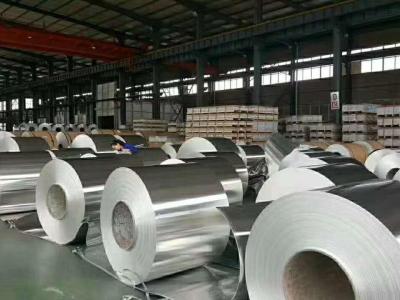
Описание
Объем поставок авиационной группы:
Она может быть настроена нестандартно, алюминиевая пластина (цельная пластина/резка), алюминиевый пруток, алюминиевые поковки, алюминиевые трубы, алюминиевые профили и т.д. Добро пожаловать на запрос!
1. Введение в 2024 materials
2024 is a typical hard aluminum alloy in the aluminum-copper-magnesium system, with relatively reasonable composition and good overall performance. Many countries produce this alloy, which is the largest amount of hard aluminum. The alloy is characterized by high strength and certain heat resistance, and can be used as working parts below 150°C. The temperature is higher than 125°C, and the strength of the 2024 alloy is higher than that of the 7075 alloy.
The forming performance is relatively good in the thermal state, annealing and new quenching state, and the heat treatment strengthening effect is significant, but the heat treatment process requires strict requirements. It has poor corrosion resistance, but it can be effectively protected by cladding with pure aluminum; cracks are prone to occur during welding, but special processes can be used to weld or rivet. Widely used in aircraft structures, rivets, truck hubs, propeller elements and various other structural parts.
2. 2024 Химический состав
| Медаль из сплава | Кремний Si | Iron Fe | Медь Cu | Марганец Mn | Magnesium Mg | Хром Cr | Zinc Zn | Титан Ti | другие | Aluminum AL | ||
| Новый сорт | Старый бренд | 0.50 | 0.50 | 3.8-4.9 | 0.3-0.9 | 1.2-1.8 | 0.10 | 0.25 | 0.15 | Каждый | всего | Маржа |
| 2024 | – | 0.05 | 0.15 | |||||||||
3. Physical performance in 2024
| Марка и состояние алюминиевого сплава | прочность на разрыв
Рм/Мпа |
Урожайность урожая
Rp0.2/Mpa |
Удлинение/% | Твердость/HBWα | плотность
(20℃) (g/cm3) |
| 2024-T4 | 425 | 275 | 14 | 120 | 2.8 |
4. Application fields in 2024
2024 aluminum is mainly used for the production of automobiles, truck hubs, molds, rivets, components, aircraft skeletons, precision parts, propeller components and other various structural parts (but not stamping forgings), such as skeleton parts on the aircraft, skins, partitions, wing ribs, spars, rivets, etc., working parts below 150℃.

 Russian
  English
  German
  French
  Portuguese
  Japanese
  Italian
  Spanish
  Arabic
  Korean