
Optimizing Cryogenic Air Cooling for High-Temperature Alloy Shaft Milling
In the realm of precision engineering, the milling of high-temperature alloy shafts presents unique challenges. These materials are known for their hardness and high thermal conductivity, making it difficult to machine them effectively. To overcome these challenges, cryogenic air cooling has emerged as a viable solution. This technique involves cooling the workpiece and cutting tool to cryogenic temperatures, which can enhance material removal rates, reduce tool wear, and improve surface finish. This article delves into the intricacies of optimizing cryogenic air cooling for high-temperature alloy shaft milling.
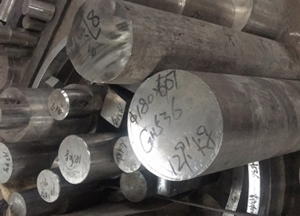
The first step in optimizing cryogenic air cooling for high-temperature alloy shaft milling is to understand the material properties. High-temperature alloys, such as Inconel, Hastelloy, and Waspaloy, possess excellent strength, corrosion resistance, and high-temperature stability. However, their hardness and thermal conductivity make them challenging to machine. By cooling the workpiece and cutting tool to cryogenic temperatures, the material’s hardness can be significantly reduced, allowing for easier machining.
To achieve effective cryogenic air cooling, a cryogenic cooling system must be designed and implemented. This system typically consists of a cryogenic storage tank, a refrigeration unit, and a distribution system that delivers the cryogenic gas to the workpiece and cutting tool. The cryogenic gas commonly used is liquid nitrogen, which has a boiling point of -196°C (-320°F). It is essential to ensure that the system is capable of maintaining the required temperature and flow rate throughout the machining process.
One of the critical aspects of optimizing cryogenic air cooling is to determine the appropriate cryogenic gas flow rate. The flow rate should be sufficient to cool the workpiece and cutting tool quickly and evenly. However, excessive flow rates can lead to a higher energy consumption and potential damage to the workpiece. It is crucial to strike a balance between cooling efficiency and energy consumption. This can be achieved by conducting experiments and analyzing the material removal rate, tool wear, and surface finish at different flow rates.
Another factor to consider is the duration of cryogenic cooling. The cooling time should be sufficient to achieve the desired temperature reduction without causing thermal shock or cracking in the workpiece. Typically, a cooling time of 5 to 10 minutes is adequate for most applications. However, this may vary depending on the specific material and machining parameters.
The choice of cutting tool also plays a vital role in optimizing cryogenic air cooling for high-temperature alloy shaft milling. The cutting tool should be selected based on its ability to withstand cryogenic temperatures and its performance in the given material. High-performance carbide or ceramic cutting tools are often preferred for their durability and thermal stability. Additionally, appropriate tool coatings and geometries should be employed to enhance tool life and surface finish.
In addition to cryogenic air cooling, other optimization techniques can be employed to improve the machining process. For instance, employing a proper cutting speed and feed rate, using high-pressure coolant, and implementing a suitable cutting strategy can further enhance the material removal rate and surface finish.
In conclusion, optimizing cryogenic air cooling for high-temperature alloy shaft milling is a complex process that requires careful consideration of various factors. By understanding the material properties, designing an efficient cryogenic cooling system, and selecting the appropriate cutting tool, it is possible to achieve significant improvements in material removal rates, tool wear, and surface finish. As the demand for precision engineering continues to grow, the optimization of cryogenic air cooling will play a crucial role in meeting the challenges posed by high-temperature alloys.

 Portuguese
  English
  German
  French
  Japanese
  Russian
  Italian
  Spanish
  Arabic
  Korean