The aerospace industry has experienced remarkable growth in recent years, driven by increasing global air travel, defense modernization programs, and the development of next-generation aircraft and spacecraft. This expansion has placed significant pressure on the supply chain for critical materials, particularly high-temperature alloys that are essential for engine components, airframe structures, and thermal protection systems. As aircraft manufacturers push the boundaries of performance with higher thrust-to-weight ratios and improved fuel efficiency, the demand for advanced materials capable of withstanding extreme temperatures has surged. High-temperature alloys, including nickel-based superalloys, cobalt-based alloys, and refractory metal alloys, have become indispensable in modern aerospace applications due to their exceptional strength, creep resistance, and thermal stability at elevated temperatures. The question arises whether the current production capacity can keep pace with the rapidly growing demand from this critical industry. 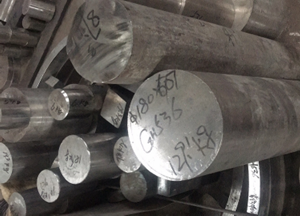 Global production of high-temperature alloys has increased steadily, but not at the same rate as aerospace industry expansion. Major producers have expanded their facilities and invested in new technologies to boost output, yet challenges persist in meeting the specific quality requirements demanded by aerospace applications. The production of high-temperature alloys is a complex process that involves precise control of alloy composition, melting techniques, and heat treatment processes. Each step requires specialized equipment and highly skilled operators, making it difficult to quickly scale production without compromising quality. Additionally, the raw materials required for high-temperature alloys, such as nickel, cobalt, chromium, and various rare elements, face their own supply constraints and price volatility. The aerospace industry’s demand for high-temperature alloys is not uniform across all applications. Gas turbine engines, which represent the largest segment, require materials capable of operating at temperatures exceeding 1000°C while maintaining mechanical integrity and resistance to oxidation and hot corrosion. These components undergo extreme thermal cycling and mechanical stress, necessitating alloys with carefully engineered microstructures. As engine manufacturers pursue higher operating temperatures to improve efficiency, they increasingly rely on advanced single-crystal and directionally solidified superalloys, which are more complex and expensive to produce. The supply chain for these specialized alloys faces additional challenges due to the limited number of qualified suppliers capable of producing them to the exacting standards required by aerospace applications. Geopolitical factors also play a significant role in the supply dynamics of high-temperature alloys. Certain critical elements are concentrated in specific regions, creating dependencies that can disrupt supply chains. Trade tensions, export restrictions, and national security concerns have led some countries to prioritize domestic production capabilities, further complicating the global supply picture. The aerospace industry, being strategically important, often receives preferential treatment in material allocation, but this can create shortages in other sectors that also rely on these materials. Technological advancements offer potential solutions to supply constraints. Powder metallurgy techniques, additive manufacturing, and advanced processing methods have enabled more efficient use of materials and reduced waste. These technologies can also produce components with complex geometries that were previously difficult or impossible to manufacture using traditional methods. However, implementing these technologies requires significant investment and time to develop and qualify for aerospace applications. Research into alternative materials and alloy compositions may eventually reduce reliance on scarce elements, but these developments are still in the early stages and require extensive testing and certification before they can be implemented in critical aerospace components. The supply-demand imbalance for high-temperature alloys is further exacerbated by the long lead times associated with material qualification and production. Aerospace components undergo rigorous testing and certification processes that can take several years to complete. Once qualified, production must be carefully controlled to maintain consistency and quality, making it difficult to rapidly increase output in response to sudden demand increases. The cyclical nature of the aerospace industry, with periods of rapid growth followed by downturns, also complicates long-term planning for material suppliers. During downturns, suppliers may reduce capacity, making it challenging to ramp up production when demand recovers. The increasing focus on sustainability and environmental regulations presents additional challenges for high-temperature alloy production. Traditional manufacturing processes are energy-intensive and generate significant emissions, leading to pressure to develop cleaner production methods. While research into more sustainable processes is ongoing, these technologies may initially be less efficient or more expensive, potentially impacting supply capacity and cost. Despite these challenges, the industry has demonstrated resilience in adapting to changing conditions. Material suppliers are investing in new technologies and expanding production capacity to meet growing demand. Collaboration between material producers, component manufacturers, and end-users has improved supply chain visibility and planning. Additionally, the development of standardized specifications and modular design approaches has helped optimize material usage and reduce waste. Looking forward, the demand for high-temperature alloys in the aerospace industry is expected to continue growing, driven by increasing air traffic, the need for more fuel-efficient aircraft, and the development of hypersonic vehicles and space exploration systems. While supply constraints will likely persist in the short to medium term, technological advancements and strategic planning should help balance supply and demand over the longer term. The aerospace industry’s ability to secure adequate supplies of high-temperature alloys will be critical to maintaining its growth trajectory and achieving performance targets in the coming decades.


 Portuguese
  English
  German
  French
  Japanese
  Russian
  Italian
  Spanish
  Arabic
  Korean