
High-temperature alloys represent a critical class of materials engineered to maintain structural integrity and performance under extreme thermal conditions. Among their most essential properties is oxidation-corrosion resistance, which determines their longevity and reliability in demanding applications such as gas turbines, aerospace components, industrial furnaces, and chemical processing equipment. The ability of these alloys to resist degradation from oxidation and corrosive environments at elevated temperatures is fundamental to their function and economic viability.
The oxidation process in high-temperature environments involves complex chemical reactions between the alloy surface and oxygen or other reactive gases. At elevated temperatures, atoms from the alloy diffuse to the surface, where they react with oxygen to form oxides. The nature and protective quality of these oxide layers significantly influence the overall resistance to oxidation. Nickel-based superalloys, for instance, form chromium oxide (Cr2O3) layers that provide substantial protection, while cobalt-based alloys may develop cobalt oxide (CoO) or spinel structures with varying protective capabilities.
Corrosion in high-temperature environments extends beyond simple oxidation and includes hot corrosion, sulfidation, and carburization. Hot corrosion, particularly Type I (high-temperature) and Type II (low-temperature), involves the penetration of molten salts, often sodium sulfate, which accelerates material degradation. Sulfidation occurs in environments containing sulfur compounds, leading to the formation of sulfides that compromise structural integrity. Carburization, on the other hand, results from carbon penetration into the alloy, causing embrittlement and loss of mechanical properties. These corrosion mechanisms can act synergistically with oxidation, creating accelerated degradation pathways that challenge material designers.
The composition of high-temperature alloys plays a decisive role in their oxidation-corrosion resistance. Chromium content is particularly critical, as it promotes the formation of continuous, adherent Cr2O3 layers that act as diffusion barriers between the alloy and the oxidizing environment. Aluminum addition enhances resistance through the formation of aluminum oxide (Al2O3), which offers superior protection at extremely high temperatures. Molybdenum and tungsten contribute to strength but may compromise oxidation resistance if not properly balanced with protective elements. Rare earth elements such as yttrium and hafnium improve oxide layer adhesion by segregating to the oxide-metal interface and reducing sulfur impurities that cause spalling.
The microstructure of high-temperature alloys significantly influences their oxidation-corrosion performance. Grain boundaries, serving as rapid diffusion paths, can either accelerate or impede degradation depending on their composition. Grain boundary engineering through controlled heat treatments can enhance resistance by precipitating protective phases along boundaries. Additionally, the distribution and morphology of secondary phases such as carbides, borides, and gamma prime (γ’) precipitates affect local composition and thus oxidation behavior. These microstructural features must be carefully optimized to balance mechanical properties with environmental resistance.
Protective coatings represent another critical strategy for enhancing oxidation-corrosion resistance. Diffusion coatings, such as aluminide and platinum-aluminide coatings, form aluminum-rich surfaces that develop protective Al2O3 layers. Overlay coatings, including MCrAlY (where M represents nickel, cobalt, or both), provide sacrificial protection through the formation of both Al2O3 and Cr2O3 layers. Thermal barrier coatings (TBCs) offer additional protection by insulating the underlying alloy from extreme temperatures while their ceramic top coats resist corrosive environments. These coating systems require precise application and careful matching with substrate alloys to ensure compatibility and long-term performance.
Testing methodologies for evaluating oxidation-corrosion resistance include isothermal and cyclic oxidation tests, hot corrosion tests, and long-term exposure evaluations. Isothermal oxidation tests measure weight change over time at constant temperature, providing data on oxidation kinetics. Cyclic oxidation tests, involving repeated heating and cooling cycles, evaluate resistance to oxide scale spalling caused by thermal stresses. Hot corrosion tests simulate aggressive environments using salt deposits to accelerate degradation. Advanced characterization techniques such as scanning electron microscopy (SEM), X-ray diffraction (XRD), and transmission electron microscopy (TEM) enable detailed analysis of oxide layers and corrosion mechanisms.
The service environment imposes specific demands on oxidation-corrosion resistance that vary with application. Aerospace turbine components face challenges from combustion gases containing sulfur, vanadium, and sodium, requiring alloys with exceptional hot corrosion resistance. Industrial furnace components must withstand thermal cycling and exposure to various combustion byproducts. Chemical processing equipment demands resistance to specific corrosive media at elevated temperatures. Each application necessitates tailored alloy compositions and protective strategies to address the particular environmental challenges encountered.
Recent developments in high-temperature alloys focus on advanced computational modeling to predict oxidation behavior, novel processing techniques to refine microstructures, and innovative coating systems with enhanced durability. Additive manufacturing enables the creation of complex geometries with optimized microstructures for improved resistance. Fundamental research continues to elucidate the mechanisms of degradation at atomic and microscopic levels, informing the development of next-generation alloys with superior oxidation-corrosion performance. These advancements extend the operating limits of high-temperature components, improve efficiency, and reduce maintenance requirements in critical applications.
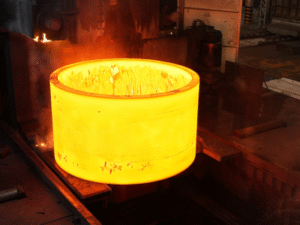
The economic implications of oxidation-corrosion resistance cannot be overstated. Components that fail prematurely due to environmental degradation result in costly downtime, repairs, and replacements. Alloys with superior oxidation-corrosion resistance enable higher operating temperatures, improving efficiency and performance in energy conversion systems. The development cost of advanced materials is offset by extended service life and reduced maintenance requirements, making oxidation-corrosion resistance a critical factor in material selection and design decisions. Life cycle cost analyses increasingly incorporate environmental degradation factors to ensure optimal material choices for high-temperature applications.
In conclusion, the oxidation-corrosion resistance characteristics of high-temperature alloys represent a complex interplay of composition, microstructure, processing, and environmental factors. The development of alloys with enhanced resistance requires a fundamental understanding of degradation mechanisms, careful selection of alloying elements, and innovative protective strategies. As operating conditions become more demanding and environmental regulations increasingly stringent, the importance of oxidation-corrosion resistance will continue to grow. Advances in materials science and engineering will drive the development of next-generation alloys capable of withstanding the most extreme environments, ensuring the reliability and efficiency of critical high-temperature components across diverse industries.

 Portuguese
  English
  German
  French
  Japanese
  Russian
  Italian
  Spanish
  Arabic
  Korean