
Iron-based high-temperature alloy plates represent a critical class of materials engineered to perform reliably under extreme thermal conditions. These materials are specifically formulated to maintain structural integrity, resist creep deformation, and exhibit excellent corrosion resistance when exposed to elevated temperatures for extended periods. The composition of these alloys typically includes iron as the primary element, combined with varying percentages of nickel, chromium, and other alloying elements such as molybdenum, tungsten, cobalt, aluminum, and titanium. The precise formulation determines the material’s specific performance characteristics and suitability for particular applications. 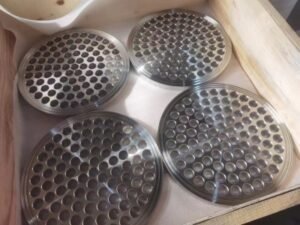
The mechanical properties of iron-based high-temperature alloy plates are carefully controlled through precise chemical composition and processing techniques. These materials typically exhibit high tensile strength at elevated temperatures, exceptional fatigue resistance, and minimal thermal expansion coefficients. The microstructure of these alloys often consists of austenitic or ferritic matrices with various precipitates that enhance high-temperature performance. Heat treatment processes such as solution treatment, aging, and stress relief are critical to achieving the desired microstructure and mechanical properties. The grain size and distribution of precipitates directly influence the material’s creep resistance and long-term stability under thermal cycling conditions.
Manufacturing iron-based high-temperature alloy plates involves several sophisticated processes including vacuum induction melting, electroslag remelting, and hot working operations. These processes ensure the removal of detrimental elements and inclusions while achieving the required chemical homogeneity. The plates are typically produced through hot rolling or forging followed by precise heat treatment to develop the optimal microstructure. Surface treatments such as shot peening may be applied to enhance fatigue properties. Quality control measures include spectrochemical analysis, mechanical testing, and microstructural examination to ensure compliance with industry specifications and performance requirements.
The applications of iron-based high-temperature alloy plates span numerous industries where materials must withstand extreme conditions. In the aerospace sector, these plates are used in gas turbine components, combustion chambers, and exhaust systems due to their ability to maintain strength at temperatures exceeding 700°C. The power generation industry utilizes these materials in boiler components, steam turbines, and heat exchanger tubes where resistance to oxidation and sulfidation is essential. Chemical processing equipment often incorporates iron-based high-temperature alloy plates for reaction vessels, heat exchangers, and piping systems exposed to corrosive media at elevated temperatures. Additionally, the automotive industry employs these materials in exhaust systems and turbocharger components to improve engine efficiency and durability.
Future developments in iron-based high-temperature alloy plates focus on enhancing performance through advanced alloy design, novel processing techniques, and improved computational modeling. Research continues to explore the addition of rare earth elements and nano-scale precipitates to further improve high-temperature strength and creep resistance. Additive manufacturing technologies are being investigated to produce complex components with optimized microstructures that cannot be achieved through conventional processing methods. As industries continue to push the boundaries of operating temperatures and efficiency requirements, iron-based high-temperature alloy plates will remain essential materials enabling technological advancement across multiple sectors.

 Korean
  English
  German
  French
  Portuguese
  Japanese
  Russian
  Italian
  Spanish
  Arabic