
In the field of aviation, weight reduction has always been a crucial pursuit. Lightweight high – temperature alloys play an indispensable role in achieving this goal. Among them, Dura Alloy stands out with its unique properties and potential.
The research on lightweight high – temperature alloys is driven by the increasing demand for more fuel – efficient and high – performance aircraft. As aircraft engines operate under extremely high – temperature and high – stress conditions, traditional materials often struggle to meet the requirements. Lightweight high – temperature alloys offer a solution. They can maintain their mechanical properties at high temperatures while being significantly lighter than conventional metals.
Dura Alloy has shown remarkable progress in this area. Its development is based on a deep understanding of material science. Scientists have been exploring various alloying elements and their combinations to optimize the performance of Dura Alloy. For instance, by adding certain rare – earth elements, the high – temperature strength and oxidation resistance of Dura Alloy can be enhanced.
One of the key advantages of Dura Alloy is its lightweight nature. In aviation, every gram of weight reduction can lead to significant fuel savings over the long term. With Dura Alloy, aircraft components can be made lighter without sacrificing strength. This means that more payload can be carried or the range of the aircraft can be extended.
Another important aspect of Dura Alloy is its high – temperature stability. In the hot environment of an aircraft engine, materials need to resist deformation and maintain their integrity. Dura Alloy has excellent creep resistance, which means it can withstand long – term stress at high temperatures without significant deformation. This property is crucial for the reliability and safety of aircraft engines.
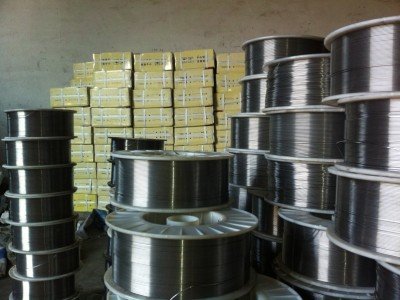
In the manufacturing process of aviation components, Dura Alloy also shows great potential. It can be processed using advanced manufacturing techniques such as 3D printing. This allows for the production of complex – shaped components with high precision. The ability to create customized parts using Dura Alloy can further improve the performance of aircraft.
However, the research on Dura Alloy is not without challenges. The cost of producing Dura Alloy is relatively high due to the use of rare – earth elements and complex manufacturing processes. Scientists are working on finding ways to reduce the cost while maintaining the high performance of Dura Alloy. They are exploring alternative alloying elements and more cost – effective production methods.
The application of Dura Alloy in aviation is still in the process of expansion. Currently, it has been used in some critical engine components, such as turbine blades. As the research progresses, we can expect to see Dura Alloy being used in more parts of an aircraft.
In the future, the combination of Dura Alloy with other advanced materials may open up new possibilities for aviation weight reduction. For example, it can be combined with carbon – fiber composites to create hybrid structures that take advantage of the best properties of both materials.
In conclusion, Dura Alloy represents a significant step forward in the research of lightweight high – temperature alloys for aviation weight reduction. Although there are challenges to overcome, its potential is undeniable. With continuous research and development, Dura Alloy will surely contribute to the development of more efficient and high – performance aircraft in the future.

 Korean
  English
  German
  French
  Portuguese
  Japanese
  Russian
  Italian
  Spanish
  Arabic