
Nickel-based superalloys represent a critical class of materials engineered to withstand extreme conditions where conventional metals would fail. These advanced alloys have become indispensable in industries requiring exceptional performance at elevated temperatures and corrosive environments. Wuxi, as a significant industrial hub in China, has emerged as a prominent center for the research, development, and production of high-performance nickel-based superalloys that meet global standards.
The exceptional properties of nickel-based superalloys stem from their unique microstructure, which is carefully controlled through precise composition and processing techniques. These alloys typically contain nickel as the primary element, supplemented by significant amounts of chromium for oxidation resistance, cobalt for solid solution strengthening, and various refractory elements such as molybdenum, tungsten, and tantalum for enhanced high-temperature capabilities. Additionally, elements like aluminum and titanium are added to form precipitates that provide critical strengthening through the gamma prime (γ’) phase.
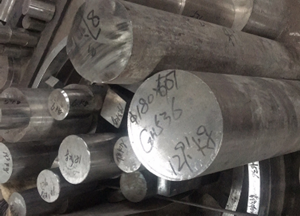
The manufacturing process of Wuxi nickel-based superalloys involves several sophisticated steps. It begins with the precise melting of raw materials in vacuum induction furnaces to ensure chemical homogeneity and removal of undesirable elements. The molten alloy is then typically processed via techniques such as vacuum arc remelting or electroslag remelting to further enhance purity and structural integrity. Subsequent thermo-mechanical processing, including hot working and heat treatment, is carefully controlled to achieve the desired grain structure and precipitate distribution that optimizes mechanical properties.
The applications of Wuxi nickel-based superalloys span multiple critical industries. In aerospace, these materials form the backbone of gas turbine engines, where they are used in turbine disks, blades, and combustor components that experience temperatures exceeding 1000°C. The energy sector relies heavily on these alloys for components in power generation systems, particularly in land-based turbines and nuclear reactors. Chemical processing plants utilize nickel-based superalloys for equipment exposed to corrosive media at high temperatures, while the oil and gas industry depends on them for downhole tools and surface equipment in harsh environments.
Research and development efforts in Wuxi continue to push the boundaries of nickel-based superalloy performance. Scientists are focusing on developing next-generation alloys with even higher temperature capabilities, improved creep resistance, and enhanced environmental durability. Advanced computational modeling and characterization techniques are being employed to understand and optimize the complex relationships between composition, processing, microstructure, and properties. These innovations aim to address the growing demand for more efficient, reliable, and sustainable high-temperature materials in an increasingly technologically advanced world.

 Japanese
  English
  German
  French
  Portuguese
  Russian
  Italian
  Spanish
  Arabic
  Korean