High-temperature alloys represent a critical class of materials used in demanding applications across aerospace, energy, and industrial sectors. These materials must maintain mechanical properties and structural integrity under extreme conditions, making the development of customized process flows essential for their successful implementation. A tailored process flow ensures optimal performance characteristics while addressing specific application requirements and manufacturing constraints. The development of customized process flows for high-temperature alloys begins with a comprehensive assessment of material properties and intended application parameters. Engineers must consider factors such as operating temperature ranges, mechanical stress conditions, environmental exposure, and regulatory compliance requirements. This initial analysis forms the foundation for designing an efficient production sequence that maximizes material performance while minimizing costs and production time. 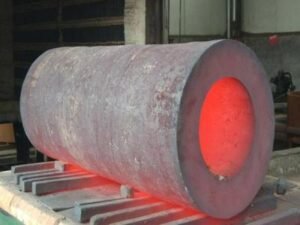 The process flow development involves multiple stages including material selection, melting and refining, primary forming, heat treatment, secondary processing, and final finishing. Each stage requires careful optimization to ensure the final product meets specifications. For instance, the melting process must control impurity levels and achieve precise chemical composition, while forming operations must account for the material’s work hardening characteristics and thermal sensitivity. Quality control measures are integrated throughout the process flow to detect and address deviations promptly. Non-destructive testing methods such as ultrasonic inspection, radiography, and eddy current testing verify material integrity at critical checkpoints. Chemical analysis and mechanical testing ensure compliance with composition and property requirements, providing data for process adjustments and continuous improvement. Customization becomes particularly important when addressing complex geometries or specialized performance requirements. In such cases, the process flow may incorporate advanced techniques such as isothermal forging, directional solidification, or powder metallurgy to achieve desired microstructures and mechanical properties. These specialized methods require precise control of temperature, atmosphere, and processing parameters to ensure consistent results. The implementation of a customized process flow requires collaboration between material scientists, process engineers, and application specialists. This multidisciplinary approach ensures that the final product not only meets technical specifications but also addresses real-world operational challenges. Documentation of the process flow parameters serves as both a production guide and a reference for future optimization efforts. As technology advances, the development of customized process flows increasingly incorporates computational modeling and simulation tools. These technologies enable virtual testing of process parameters before physical implementation, reducing development time and resource requirements. Machine learning algorithms further enhance process optimization by identifying subtle correlations between processing conditions and final product properties. The economic benefits of customized process flows extend beyond improved material performance. By optimizing each stage of production, manufacturers can reduce energy consumption, minimize material waste, and increase production throughput. These efficiency gains contribute to more sustainable manufacturing practices while maintaining the high quality standards required for critical applications. In conclusion, the development of customized process flows for high-temperature alloys represents a sophisticated engineering discipline that balances technical requirements with practical manufacturing considerations. Through systematic analysis, precise control, and continuous improvement, manufacturers can produce high-performance materials that meet the increasingly demanding requirements of modern industrial applications.


 Japanese
  English
  German
  French
  Portuguese
  Russian
  Italian
  Spanish
  Arabic
  Korean