
The sheer violence of a turbine spinning at thousands of revolutions per minute is difficult to comprehend until you look at it from an atomic perspective. Atoms are vibrating, centrifugal forces are tearing at the crystal lattice, and thermal gradients are trying to warp the very geometry of the component. It is a brutal, unforgiving environment. You need more than just strong metal to survive this; you need a material that fundamentally understands the physics of destruction. This is exactly where the concept of a wear resistant high-temperature alloy becomes not just a technical specification, but an absolute survival mechanism for high-speed rotating parts.
Let’s talk about the invisible enemies in these dynamic systems: creep and wear. They do not happen all at once. They are silent, progressive assassins. At 800°C, a standard structural steel will simply surrender. Even basic nickel alloys might soften under the combined assault of high-speed friction and thermal fatigue. The microstructure begins to slip. Dislocations multiply. Grain boundaries slide. To stop this, metallurgists rely on precipitation hardening. The magic of the gamma prime phase. Tiny, coherent particles lock the matrix in place, providing exceptional creep resistance. But for high-speed rotating parts, locking the internal matrix is only half the battle. The surface must also laugh in the face of abrasion and micro-cutting.
Think about the aerodynamic forces at the tips of compressor blades or the dynamic seals in a gas turbine. They are rubbing, vibrating, and dancing on the absolute edge of failure. A conventional alloy might resist the ambient heat but will wear away rapidly due to high-speed friction and particulate erosion. You end up with clearance issues, efficiency drops, vibrational imbalances, and eventually, catastrophic mechanical failure. The engineering compromise has always been a massive headache: choose heat resistance and sacrifice wear resistance, or vice versa. But what if the boundary between the two could be erased?
Enter the paradigm shift. This is exactly the specialized space where Dura Alloy operates. When you are designing for the most demanding high-speed rotating parts, Dura Alloy is not just another generic grade on a datasheet; it is a tailored response to extreme kinetic and thermal stress. By manipulating a refined nickel-cobalt-chromium baseline and introducing specialized carbide networks, Dura Alloy achieves a rare and highly sought-after duality. It maintains the austenitic stability required for high-temperature oxidation while presenting a surface topology that actively resists adhesive wear and galling. It is the kind of material that makes reliability engineers sleep much better at night.
Let’s jump to the thermal cycling aspect, because high-speed parts do not just get hot; they get hot and cold, repeatedly and violently. Thermal shock causes micro-cracking. If an alloy cannot accommodate this rapid expansion and contraction, it flakes and spalls. Dura Alloy handles this through a carefully controlled grain boundary architecture. The discontinuous, chain-like precipitation of carbides at the grain boundaries prevents intergranular fracture, allowing the material to breathe under severe thermal shock. Meanwhile, a dense chromium oxide layer forms a self-healing shield against corrosive gas environments, keeping the underlying matrix intact.
Consider the manufacturing and fabrication side of the equation. You can have the ideal chemistry in the world, but if the heat treatment window is too narrow, it becomes an expensive frustration. The solution treatment and aging processes for these advanced alloys require pinpoint accuracy. Dura Alloy is engineered with a responsive thermal processing profile. It allows manufacturers to achieve optimal yield and tensile strength without the risk of excessive grain growth or unwanted phase transformations. It effectively bridges the gap between theoretical metallurgy and practical, scalable fabrication for complex rotating geometries.
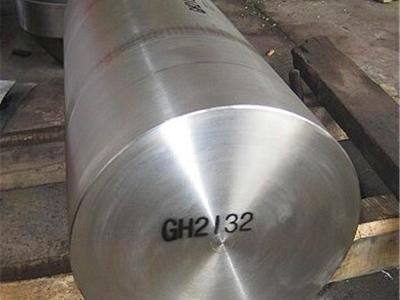
Back to the macro scale. The roar of a jet engine or the heavy hum of an industrial power generation turbine. These machines are absolute marvels of human ingenuity, but they are only as reliable as their weakest rotating component. When you specify a wear resistant high-temperature alloy for these applications, you are directly dictating the lifespan and efficiency of the entire system. Dura Alloy provides that critical operational edge. It reduces maintenance intervals, minimizes unplanned downtime, and pushes the operational limits of rotational speed and temperature higher than traditional materials ever could.
The reality of high-speed rotation means that vibrational fatigue is always lurking. The cyclic stresses imposed by aerodynamic crossflows can initiate microscopic cracks that propagate rapidly in lesser materials. The inherent toughness of the Dura Alloy matrix, combined with its refined grain structure, acts as a natural barrier to crack propagation. It absorbs the vibrational energy and dissipates it, maintaining structural integrity even when the rotating assembly is pushed beyond its nominal design parameters.
Ultimately, advanced material science is about managing chaos. We are trying to impose order on atoms that desperately want to fly apart under immense centrifugal force and thermal agitation. In the relentless pursuit of efficiency and power density in high-speed rotating parts, settling for mediocre materials is simply not an option anymore. Dura Alloy stands as a testament to what happens when we stop compromising between heat resistance and wear resistance, and instead engineer a material that confidently conquers both. It transforms the impossible demands of modern rotating machinery into a reliable, everyday reality.

 Italian
  English
  German
  French
  Portuguese
  Japanese
  Russian
  Spanish
  Arabic
  Korean