
Descrizione
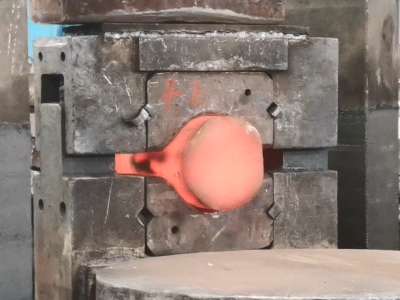
Titanium forgings are customized according to the drawings
Titanium rod Φ(8-400) ×L≤5000mm (rolled rod, forged rod)
Titanium plate/belt (0.3-60.0) × (400-1000) × (1000-3500) mm (cold rolled plate, hot rolled plate)
Titanium tube Φ(3-210) × (0.2-10.0) ×L (rolled pipe, extruded pipe)
Titanium ring Outer diameter φ(100-1200) × Inner diameter Φ(100-1000) × Height (20-800) mm
Titanium round cake Φ(150-1200) × (20-800) mm
Titanium wire Φ(0.1-7.0) ×L
1. Introduction to TC4 Materials
Titanium alloy TC4 is a typical (α+β) type titanium alloy. The corresponding grade of TC4 is Ti-6Al-4V. Since it contains 6% of the α-stabilizing element Al and 4% of the β-stabilizing element V, TC4 has good comprehensive performance. It also has the advantages of low density, high specific strength, good corrosion resistance and good process performance. It is an ideal aerospace engineering structural material with a high specific strength.
Titanium alloy TC4 can be used in 400℃ for a long time. It is mainly used in the aviation industry to manufacture fans and compressor discs for engines, as well as important structural parts such as beams, joints and partitions in aircraft structures. TC4 is mainly used in annealed state, and can also be further used to make solution failure treatment. It has good process plasticity and superplasticity, and is suitable for various pressure processing and molding. Welding and machining can also be carried out in various ways.
2. TC4 chemical composition
| Numero del marchio | Composizione chimica (percentuale in peso) | |||||||||||
| Composizione chimica (WT%) | ||||||||||||
| TC4 | Ingredienti chimici | titanio | ferro | carbone | azoto | idrogeno | ossigeno | alluminio | vanadio | Altre impurità | ||
| (Di) | (Fe) | (C) | (N) | (H) | (O) | (Al) | (V) | singolo | somma | |||
| Titanio puro industriale | margine | ≤0.30 | ≤0.10 | ≤0.05 | ≤0.015 | ≤0.25 | 5.5~6.8 | 3.5~4.5 | ≤0.10 | ≤0.40 | ||
3. TC4 Physical properties
TC4 titanium alloy density: 4.5 (g/cm3) Operating temperature -100~550 (℃)
TC4 strength sb=1.012GPa, specific strength sb/g=23.5, while the specific strength sb/g of alloy steel is less than 18.
| Numero del marchio | Le proprietà meccaniche a temperatura ambiente non sono inferiori a | Le proprietà meccaniche alle alte temperature non sono inferiori a | ||||||
| Resistenza alla trazione σb MPa | Resistenza allo snervamento σ0,2MPa | Allungamento δ5% | Restringimento ψ % | Valore d'impatto αk J/cm 2 | Temperatura di prova ℃ | Resistenza alla trazione σb MPa | Resistenza a lungo termine σ100 MPa | |
| TC1 | 588 | — | 15 | 30 | 44.1 | 350 | 343 | 324 |
| TC2 | 686 | — | 12 | 30 | 39.2 | 350 | 422 | 392 |
| TC4 | 902 | 824 | 10 | 30 | 39.2 | 400 | 618 | 569 |
| TC6 | 981 | — | 10 | 23 | 29.4 | 400 | 736 | 667 |
| TC9 | 1059 | — | 9 | 25 | 29.4 | 500 | 785 | 588 |
| TC10 | 1030 | — | 12 | 25~30 | 34.3 | 400 | 834 | 785 |
| TC11 | 1030 | — | 10 | 30 | 29.4 | 500 | 686 | 588 |
4. Technical standards for TC4 materials
GB/T3620.1-2016 Titanium and Titanium alloy grades and chemical compositions
GB/T 3621-2007 ASTM/B265 Titanium and Titanium alloy sheet
GB/T2965 -2007 ASTM/B348 Titanium and Titanium alloy rod
GB/T 3624-2010 ASTM337 Titanium and Titanium alloy seamless pipe
GB/T16598-2013 ASTM381 Titanium and Titanium alloy tubes for heat exchangers and condensers
GB/T13810-1997 AMST/F136 Titanium and Titanium alloy processing materials for surgical implants
GB/T3623-2007 AMST/B863 Titanium and Titanium alloy wire
AMST/B265 ASTM/B265 titanium and titanium alloy tapes and foils
TC4 heat treatment performance
TC4 titanium alloy heats to 1020 degrees, and the high-temperature microstructure of the alloy is composed of single-phase β, which is a solid solution. When the microstructures obtained are different at different cooling rates, such as water quenching, air cooling and furnace cooling, the microstructure obtained is different. The water quenching (WQ) structure is martensite α’+β phase, the air cooling (AC) structure is needle-shaped α+β phase and original β grain boundary phase, and the furnace cooling (FC) structure is strip-shaped α+β phase and original β phase grain boundary.
Come nel caso precedente, quando si riscalda a 950 gradi e a 850 gradi, anche la microstruttura ottenuta dopo il raffreddamento è diversa a seconda della velocità di raffreddamento. A 950 gradi, il tessuto quenched (WQ) in acqua è costituito dalla fase primaria equiaxed α e dalla fase α'+β, il tessuto raffreddato ad aria (AC) è costituito dalla fase primaria equiaxed α e dalla fase β aghiforme e il tessuto raffreddato in forno (FC) è costituito dalla fase primaria equiaxed α e dal limite del grano. A 850 gradi, il tessuto quenched (WQ) in acqua è costituito dalla fase α equiaxed primaria e dalla fase β metastabile, mentre il tessuto raffreddato ad aria (AC) è costituito dalla fase α equiaxed primaria e dalla fase β trasformata.
After heating to 1020 degrees, 950 degrees and 850 degrees, it cools at different cooling speeds. The room temperature mechanical properties are shown in Table 1
| Temperatura di riscaldamento e metodo di raffreddamento | Resistenza alla trazione/Mpa | Allungamento/% | Tasso di ritiro superficiale/% |
| 1020 gradi Nuoto (WQ) | 1098 | 6.0 | 8.0 |
| Raffreddamento ad aria a 1020 gradi (AC) | 1005 | 9.0 | 13.5 |
| 1020 gradi raffreddamento del forno (FC) | 960 | 12.0 | 22.5 |
| 950 gradi Nuoto (WQ) | 1035 | 17.0 | 61.5 |
| Raffreddamento ad aria a 950 gradi (AC) | 919 | 20.0 | 50.0 |
| Raffreddamento in forno a 950 gradi (FC) | 902 | 21.0 | 48.0 |
| 850 gradi Nuoto (WQ) | 976 | 18.0 | 49.0 |
| Raffreddamento ad aria a 850 gradi (AC) | 951 | 18.0 | 49.0 |
5. TC4 application fields
- Viene utilizzato principalmente nei dischi e nelle pale dei compressori aerei, nei gusci resistenti alla pressione delle navi, nei pezzi forgiati di grandi dimensioni, nei pezzi forgiati per stampi, ecc;
- Utilizzato per produrre razzi, missili e parti strutturali di aerei, scheletri di aerei, pelli, componenti di motori, travi, ecc;
- Sistemi di tubature, valvole e pompe corrosi dall'acqua marina;
- Condensatori per centrali elettriche, acceleratori per la raffinazione del petrolio e la desalinizzazione dell'acqua di mare, dispositivi per il controllo dell'inquinamento ambientale, ecc;
- Scambiatore di calore chimico, corpo pompa, torre di distillazione;
- Ampiamente utilizzato nei dispositivi medici

 Italian
  English
  German
  French
  Portuguese
  Japanese
  Russian
  Spanish
  Arabic
  Korean