
Corrosion-resistant high-temperature alloy tubing represents a critical component in various industrial applications where extreme conditions prevail. These specialized tubular products are engineered to withstand corrosive environments while maintaining structural integrity at elevated temperatures, making them indispensable in sectors such as chemical processing, power generation, aerospace, and oil and gas exploration. The development of such advanced materials has been driven by the increasing demand for equipment that can operate reliably in harsh conditions without frequent replacement or maintenance.
The composition of corrosion-resistant high-temperature alloy tubing typically includes elements such as nickel, chromium, molybdenum, and sometimes tungsten or cobalt. These elements contribute to the material’s exceptional resistance to oxidation, sulfidation, and other forms of chemical degradation. The precise alloy formulation is carefully balanced to achieve optimal mechanical properties while ensuring maximum performance in specific operating environments. 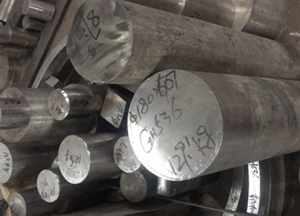
In chemical processing plants, these alloy tubes are utilized in heat exchangers, reactors, and distillation columns where exposure to aggressive chemicals and high temperatures is constant. The ability of these materials to maintain their properties under such conditions significantly extends equipment service life and reduces operational costs. Similarly, in power generation facilities, particularly those utilizing advanced energy cycles, corrosion-resistant alloy tubing plays a vital role in boiler and heat recovery steam generator components, where temperatures can exceed 700°C and exposure to combustion byproducts creates highly corrosive conditions.
The manufacturing process of corrosion-resistant high-temperature alloy tubing involves several critical steps, including precise melting and alloying, hot and cold working, heat treatment, and stringent quality control measures. Each stage must be carefully controlled to ensure the final product meets the required specifications for mechanical properties, dimensional accuracy, and corrosion resistance. Non-destructive testing methods such as ultrasonic testing, eddy current inspection, and visual examination are routinely employed to detect any potential defects that could compromise performance in service.
As industrial processes continue to evolve toward more extreme operating conditions to enhance efficiency and reduce environmental impact, the demand for advanced corrosion-resistant high-temperature alloy tubing is expected to grow. Research and development efforts are focused on developing new alloy compositions with enhanced properties, improved manufacturing techniques to reduce costs, and innovative surface treatments to further extend service life. The continuous advancement in material science and engineering will ensure that corrosion-resistant high-temperature alloy tubing remains at the forefront of enabling safe, reliable, and efficient industrial operations in increasingly demanding environments.

 Italian
  English
  German
  French
  Portuguese
  Japanese
  Russian
  Spanish
  Arabic
  Korean