
High-temperature resistant alloy castings represent a critical component in numerous industrial applications where extreme heat conditions prevail. These specialized materials are engineered to maintain structural integrity and mechanical properties at temperatures that would cause conventional alloys to fail. The development of such castings involves precise metallurgical formulations and advanced manufacturing techniques to ensure consistent performance under thermal stress.
The primary characteristic of high-temperature resistant alloy castings is their ability to resist oxidation, creep, and thermal fatigue. These properties are achieved through careful selection of alloying elements such as nickel, cobalt, chromium, and various refractory metals. The microstructure of these alloys is specifically designed to provide stability at elevated temperatures, preventing phase transformations that could compromise mechanical strength.
In the aerospace industry, high-temperature resistant alloy castings are indispensable for components like turbine blades, combustion chambers, and exhaust systems. These parts must withstand temperatures exceeding 1000°C while maintaining dimensional accuracy and mechanical reliability. The energy sector also relies heavily on these materials for gas turbine components, boiler parts, and nuclear reactor components where safety and performance are paramount.
The manufacturing process of high-temperature resistant alloy castings involves several critical stages. Initially, the raw materials are carefully weighed and melted in vacuum induction furnaces to prevent contamination. The molten alloy is then poured into precision molds using investment casting or similar techniques. Post-casting heat treatment is essential to develop the required microstructure and mechanical properties. Quality control measures including non-destructive testing and metallurgical analysis ensure compliance with stringent specifications.
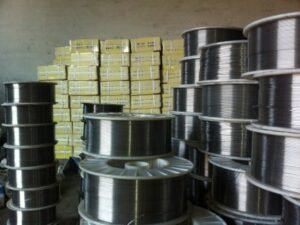
The selection of appropriate high-temperature alloy casting depends on specific operating conditions including temperature range, mechanical loads, and environmental factors. Engineers must consider factors such as thermal expansion coefficients, thermal conductivity, and resistance to hot corrosion when specifying materials for particular applications. Continuous research in this field focuses on developing alloys with enhanced properties, improved processability, and reduced environmental impact.
As industrial processes continue to push the boundaries of temperature and efficiency, the demand for advanced high-temperature resistant alloy castings grows. These materials enable the development of more powerful engines, more efficient energy conversion systems, and longer-lasting industrial equipment. The ongoing evolution of alloy compositions and manufacturing techniques promises further improvements in performance and reliability for critical applications across multiple industries.

 Italian
  English
  German
  French
  Portuguese
  Japanese
  Russian
  Spanish
  Arabic
  Korean