
High-temperature alloys and stainless steel are both widely used materials in various industries due to their excellent corrosion resistance and mechanical properties. However, these materials have distinct characteristics that make them suitable for different applications, especially in extreme environments.
The primary difference between high-temperature alloys and stainless steel lies in their chemical composition. Stainless steel primarily contains iron, chromium, and nickel, with chromium content typically ranging from 10.5% to 30%. This chromium content forms a passive oxide layer that provides corrosion resistance. In contrast, high-temperature alloys contain a more complex composition that includes significant amounts of nickel, cobalt, chromium, and various other elements such as molybdenum, tungsten, tantalum, and aluminum. These additional elements enhance the material’s ability to maintain strength and resist oxidation at elevated temperatures.
When considering temperature resistance, high-temperature alloys outperform stainless steel significantly. Most stainless steels can withstand continuous service temperatures up to about 870°C (1600°F), though some specialized grades may reach up to 1150°C (2100°F) for short periods. High-temperature alloys, however, are specifically designed to maintain mechanical properties at much higher temperatures, with some capable of withstanding temperatures exceeding 1200°C (2200°F) depending on the specific alloy composition and application requirements. 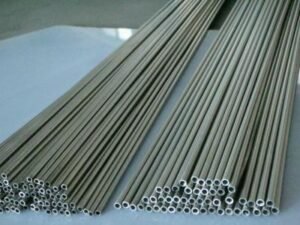
Mechanical properties represent another critical difference between these materials. Stainless steel offers good strength and toughness at room temperature but experiences significant strength reduction as temperature increases. High-temperature alloys maintain their strength, creep resistance, and structural integrity even under prolonged exposure to extreme heat. This characteristic makes them indispensable for applications involving jet engines, gas turbines, and other high-heat environments.
The applications for these materials differ considerably due to their distinct properties. Stainless steel is commonly used in kitchen equipment, medical instruments, automotive trim, and architectural applications where corrosion resistance is needed but extreme temperatures are not a concern. High-temperature alloys find their primary applications in aerospace components, power generation turbines, chemical processing equipment, and nuclear reactors where materials must perform reliably under extreme conditions.
Cost considerations also differentiate these materials significantly. High-temperature alloys are generally more expensive than stainless steel due to their complex composition, specialized manufacturing processes, and the scarcity of certain alloying elements. The price difference can be substantial, with high-temperature alloys costing several times more than comparable stainless steel grades. This cost factor often influences material selection, especially in applications where stainless steel might suffice but high-temperature alloys are specified for added safety margin.
Selecting between high-temperature alloys and stainless steel requires careful evaluation of several factors including operating temperature, mechanical requirements, environmental conditions, and budget constraints. Engineers must consider not only the initial material cost but also the total lifecycle costs, which may include maintenance expenses, replacement frequency, and energy efficiency implications.
In conclusion, while both high-temperature alloys and stainless steel offer valuable properties for various applications, their differences in composition, temperature resistance, mechanical properties, and cost make them suitable for distinct purposes. Understanding these differences allows for informed material selection that optimizes performance, reliability, and cost-effectiveness in specific applications.

 French
  English
  German
  Portuguese
  Japanese
  Russian
  Italian
  Spanish
  Arabic
  Korean