
High-temperature alloys represent a critical class of materials engineered to maintain exceptional mechanical properties and structural integrity under extreme thermal conditions. These alloys, primarily composed of nickel, cobalt, iron, and various refractory elements, undergo specialized processing to achieve their remarkable performance characteristics. The hot working process stands as a fundamental manufacturing technique that significantly influences the microstructure and final properties of these advanced materials.
The hot working of high-temperature alloys begins with precise heating of the alloy billets or ingots to temperatures typically ranging from 900°C to 1200°C, depending on the specific alloy composition. This elevated temperature range ensures the material remains in a ductile state, facilitating plastic deformation without cracking. The heating process must be carefully controlled to prevent excessive grain growth and surface oxidation, which could compromise material integrity. Uniform heating throughout the cross-section is essential to ensure consistent mechanical properties in the final product.
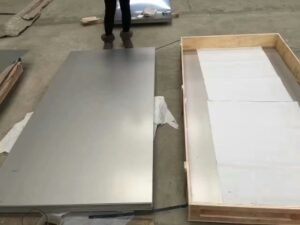
Once properly heated, the alloy undergoes deformation through various hot working techniques including forging, rolling, extrusion, and pressing. Among these, forging remains the most prevalent method for producing high-temperature alloy components due to its ability to refine the microstructure and enhance mechanical properties. During the forging process, the heated alloy is subjected to compressive forces that induce plastic deformation, breaking down coarse as-cast structures and promoting the formation of fine, uniform grain distributions. This grain refinement contributes significantly to the improved creep resistance, fatigue strength, and overall durability of the final components.
The parameters controlling the hot working process require meticulous attention. The strain rate must be optimized to balance between achieving sufficient deformation for microstructural refinement and avoiding excessive heat generation that could lead to undesirable phase transformations. Similarly, the total amount of deformation must be carefully controlled to ensure complete recrystallization while preventing the formation of texture that might compromise isotropic properties. The interpass temperature between deformation stages also plays a crucial role in determining the final microstructure and mechanical performance.
Following the hot working deformation, controlled cooling becomes essential to prevent thermal stresses and maintain the desired microstructural characteristics. The cooling rate must be carefully managed to avoid the formation of brittle phases while ensuring adequate precipitation strengthening occurs in age-hardenable alloys. Subsequent heat treatments may be employed to further optimize the microstructure and achieve the precise balance of mechanical properties required for specific applications.
The quality control of hot worked high-temperature alloys involves comprehensive evaluation of both surface and internal characteristics. Non-destructive testing methods such as ultrasonic inspection and dye penetrant testing identify surface discontinuities, while metallographic examination reveals grain structure, phase distribution, and the presence of any defects. Mechanical testing verifies that the material meets the specified requirements for tensile strength, creep resistance, and fatigue performance.
In conclusion, the hot working process represents a critical manufacturing pathway for transforming high-temperature alloy raw materials into components capable of withstanding extreme service conditions. The precise control of temperature, deformation parameters, and subsequent processing determines the final microstructure and mechanical properties that make these materials indispensable in aerospace, power generation, and other demanding industrial applications.

 French
  English
  German
  Portuguese
  Japanese
  Russian
  Italian
  Spanish
  Arabic
  Korean