
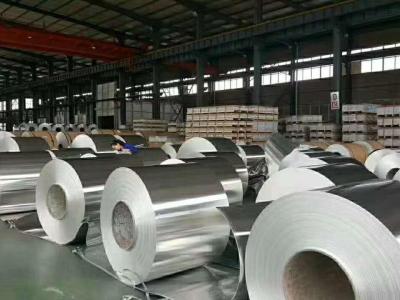
Description
Étendue de la fourniture du groupe Aviation :
Il peut être personnalisé hors norme, plaque d'aluminium (plaque entière/coupe), tige d'aluminium, pièces forgées en aluminium, tubes d'aluminium, profils d'aluminium, etc. N'hésitez pas à vous renseigner !
1. Introduction à la 2024 materials
2024 is a typical hard aluminum alloy in the aluminum-copper-magnesium system, with relatively reasonable composition and good overall performance. Many countries produce this alloy, which is the largest amount of hard aluminum. The alloy is characterized by high strength and certain heat resistance, and can be used as working parts below 150°C. The temperature is higher than 125°C, and the strength of the 2024 alloy is higher than that of the 7075 alloy.
The forming performance is relatively good in the thermal state, annealing and new quenching state, and the heat treatment strengthening effect is significant, but the heat treatment process requires strict requirements. It has poor corrosion resistance, but it can be effectively protected by cladding with pure aluminum; cracks are prone to occur during welding, but special processes can be used to weld or rivet. Widely used in aircraft structures, rivets, truck hubs, propeller elements and various other structural parts.
2. 2024 Composition chimique
| Médaille en alliage | Silicium Si | Fer Fe | Cuivre Cu | Manganèse Mn | Magnésium Mg | Chrome Cr | Zinc Zn | Titane Ti | autres | Aluminium AL | ||
| Nouveau grade | Ancienne marque | 0.50 | 0.50 | 3.8-4.9 | 0.3-0.9 | 1.2-1.8 | 0.10 | 0.25 | 0.15 | Chaque | total | marge |
| 2024 | – | 0.05 | 0.15 | |||||||||
3. Physical performance in 2024
| Nuance et état de l'alliage d'aluminium | résistance à la traction
Rm/Mpa |
Rendement du rendement
Rp0,2/Mpa |
Élongation/% | Dureté/HBWα | densité
(20℃) (g/cm3) |
| 2024-T4 | 425 | 275 | 14 | 120 | 2.8 |
4. Application fields in 2024
2024 aluminum is mainly used for the production of automobiles, truck hubs, molds, rivets, components, aircraft skeletons, precision parts, propeller components and other various structural parts (but not stamping forgings), such as skeleton parts on the aircraft, skins, partitions, wing ribs, spars, rivets, etc., working parts below 150℃.

 French
  English
  German
  Portuguese
  Japanese
  Russian
  Italian
  Spanish
  Arabic
  Korean