
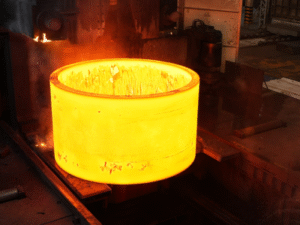
Heat treatment is a critical process in the manufacturing and maintenance of superalloys, which are known for their exceptional high-temperature performance and resistance to corrosion. These materials are essential in various high-performance applications, including jet engines, gas turbines, and other aerospace components. The effectiveness of heat treatment in strengthening superalloys lies in its ability to modify the microstructure and properties of these alloys, thereby enhancing their mechanical strength and durability. One of the primary objectives of heat treatment is to achieve the desired balance between strength and toughness, which is crucial for the reliable operation of superalloy components under extreme conditions. The process typically involves controlled heating and cooling cycles, which can lead to phase transformations that significantly improve the material’s performance. For instance, solution treatment is often used to dissolve solute atoms into the crystal lattice, followed by quenching to retain these atoms in a supersaturated state. This preliminary step is essential for subsequent aging treatments, which precipitate fine particles that strengthen the alloy. Aging, either natural or forced, allows these particles to grow to optimal sizes, further enhancing the mechanical properties. The effectiveness of heat treatment also depends on the specific composition of the superalloy, as different alloys may require different temperatures and times for optimal results. For example, some superalloys benefit from rapid cooling rates to minimize grain growth, while others may require slow cooling to allow for complete phase transformation. Additionally, the presence of alloying elements such as chromium, nickel, and molybdenum can influence the heat treatment process and its outcomes. Advanced heat treatment techniques, such as controlled atmosphere processing and laser heat treatment, have further improved the effectiveness of strengthening superalloys. These methods allow for precise control over the microstructure, leading to enhanced performance and extended service life of the components. In conclusion, heat treatment plays a vital role in optimizing the properties of superalloys, making it an indispensable step in their production and application. By carefully controlling the heating and cooling processes, manufacturers can achieve the desired balance of strength, toughness, and corrosion resistance, ensuring that superalloy components perform reliably in the most demanding environments.

 French
  English
  German
  Portuguese
  Japanese
  Russian
  Italian
  Spanish
  Arabic
  Korean