The cold working process of high-temperature alloys represents a critical manufacturing technique that enhances material properties through plastic deformation at room temperature. This method involves shaping alloy components without the application of heat, thereby inducing work hardening and improving mechanical characteristics essential for extreme operating environments. High-temperature alloys, composed primarily of nickel, cobalt, iron, and various refractory elements, possess exceptional resistance to thermal degradation and mechanical stress, making them ideal for aerospace, power generation, and chemical processing applications. The cold working process begins with the preparation of raw material, typically in the form of hot-rolled bars or sheets that undergo initial annealing to achieve a uniform microstructure. These materials then enter the cold working stage where they are subjected to incremental deformation through rolling, drawing, or forging operations. The controlled reduction in cross-sectional area increases dislocation density within the crystal structure, resulting in enhanced strength, hardness, and dimensional stability. 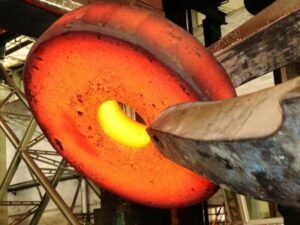 The selection of appropriate cold working parameters requires careful consideration of alloy composition, initial microstructure, and desired final properties. Excessive deformation can lead to cracking or surface defects, while insufficient working may not achieve the required mechanical improvements. Intermediate annealing treatments are often necessary to restore ductility and continue the cold working process. The temperature and duration of these annealing cycles must be precisely controlled to avoid precipitate formation that could compromise high-temperature performance. Surface preparation plays a vital role in the cold working process, as any contamination can lead to surface imperfections or reduced fatigue life. Chemical cleaning, mechanical polishing, and protective coatings may be employed to maintain surface integrity throughout the manufacturing sequence. The cold working process also influences the grain structure of high-temperature alloys, with controlled deformation promoting refined grain boundaries that enhance creep resistance and thermal fatigue properties. Post-working heat treatments are typically required to optimize the balance between strength and toughness, ensuring the material performs reliably under cyclic thermal conditions. The dimensional accuracy achieved through cold working eliminates the need for extensive machining operations, reducing production costs and material waste. However, the springback characteristics of cold worked alloys must be accounted for in tool design to achieve final dimensional specifications. Residual stresses induced during cold working can be managed through stress relief treatments without compromising the enhanced mechanical properties. The cold working process of high-temperature alloys continues to evolve with advances in precision forming technology and computational modeling, enabling manufacturers to achieve increasingly complex geometries with superior material performance. As operating temperatures increase and component designs become more sophisticated, the cold working process remains fundamental to producing high-performance alloy components that meet the demanding requirements of modern engineering applications.


 French
  English
  German
  Portuguese
  Japanese
  Russian
  Italian
  Spanish
  Arabic
  Korean