High-temperature alloys are critical components in industries such as aerospace, power generation, and chemical processing where materials must withstand extreme conditions while maintaining structural integrity. The quality and reliability of these alloys directly impact the safety and performance of the systems in which they are used. Non-destructive testing (NDT) methods provide essential techniques for evaluating the quality of high-temperature alloys without causing damage to the material. These methods enable manufacturers and inspectors to identify defects, inconsistencies, and material properties that could compromise performance under high-temperature conditions. 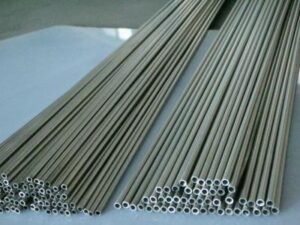 Ultrasonic testing is one of the most commonly used NDT methods for high-temperature alloys. This technique utilizes high-frequency sound waves to detect internal flaws such as cracks, voids, and inclusions. The sound waves travel through the material and are reflected back to a transducer when they encounter discontinuities. The time taken for the waves to return and the amplitude of the reflected signals provide information about the size, location, and nature of any defects. Ultrasonic testing is particularly effective for detecting subsurface flaws and provides detailed information about material properties. Radiographic testing, also known as X-ray or gamma-ray testing, involves exposing the material to radiation and capturing the resulting image on a detector. Areas of different density or thickness in the alloy appear as variations in the image, allowing inspectors to identify internal defects, porosity, or inclusions. This method is highly effective for detecting volumetric defects and provides a permanent record of the inspection results. Eddy current testing uses electromagnetic induction to detect surface and near-surface defects in conductive materials. When an alternating current is applied to a coil, it creates an alternating magnetic field that induces eddy currents in the material being tested. Defects or variations in the material disrupt these eddy currents, which can be detected by measuring changes in the impedance of the coil. Eddy current testing is particularly useful for detecting surface cracks and measuring material properties such as conductivity and permeability. Magnetic particle testing is employed for ferromagnetic high-temperature alloys to detect surface and near-surface defects. This method involves magnetizing the material and applying magnetic particles that are attracted to areas where magnetic flux leakage occurs, indicating the presence of defects. Magnetic particle testing is highly sensitive and can detect very small cracks and discontinuities that might otherwise be difficult to identify. Liquid penetrant testing is another widely used NDT method for detecting surface-breaking defects in high-temperature alloys. A liquid penetrant is applied to the surface of the material and seeps into any surface-breaking defects. After excess penetrant is removed, a developer is applied, which draws the penetrant out of the defects, making them visible. This method is simple, cost-effective, and highly sensitive for detecting surface cracks. Thermographic testing, or infrared testing, detects defects by measuring temperature variations on the surface of the material. When heat is applied to the material, areas with defects or inconsistencies will have different thermal characteristics compared to sound material. This method is particularly useful for detecting delaminations, voids, and other defects that affect thermal conductivity. Selecting the appropriate NDT method depends on various factors including the type of material, the nature of potential defects, accessibility, and required sensitivity. In many cases, multiple NDT methods may be used in combination to ensure comprehensive quality assessment. The implementation of these non-destructive testing methods ensures that high-temperature alloys meet the stringent requirements demanded by their applications, preventing potential failures that could lead to catastrophic consequences. Regular inspection and quality control using NDT methods extend the service life of high-temperature alloy components and contribute to the overall safety and reliability of critical systems.


 French
  English
  German
  Portuguese
  Japanese
  Russian
  Italian
  Spanish
  Arabic
  Korean