
High-temperature alloys are specialized materials designed to maintain their mechanical properties under extreme thermal conditions. These alloys find extensive applications in aerospace, energy generation, and chemical processing industries where components are exposed to elevated temperatures and cyclic loading conditions. The fatigue life of these materials represents a critical parameter that determines the operational reliability and service duration of components such as turbine blades, combustion chambers, and heat exchangers.
The fatigue life of high-temperature alloys refers to the number of stress cycles a material can endure before failure occurs under specific conditions of temperature, stress amplitude, and mean stress. Unlike room temperature fatigue behavior, the fatigue performance of these alloys is significantly influenced by thermal effects, including oxidation, creep, and microstructural changes that occur at elevated temperatures. These factors accelerate damage accumulation and reduce the material’s resistance to cyclic loading.
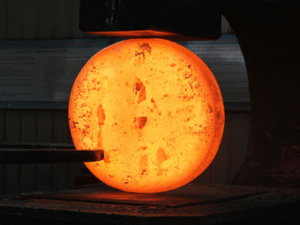
Several key factors influence the fatigue life of high-temperature alloys. Temperature plays a crucial role, as increased thermal activation enhances diffusion processes and promotes microstructural degradation. Stress amplitude and mean stress directly affect the crack initiation and propagation rates, with higher stress levels leading to reduced fatigue life. Additionally, environmental factors such as oxidation and hot corrosion can significantly degrade the material’s surface integrity, creating preferential sites for crack initiation.
The microstructure of high-temperature alloys, including grain size, precipitate distribution, and phase stability, profoundly impacts fatigue performance. Nickel-based superalloys, for instance, derive their high-temperature strength from a γ’ precipitate phase that resists dislocation motion. However, prolonged exposure to elevated temperatures can cause coarsening of these precipitates, reducing their effectiveness and consequently decreasing fatigue life.
Testing methods for evaluating fatigue life of high-temperature alloys typically involve rotating beam fatigue tests, tension-compression fatigue tests, and more complex thermo-mechanical fatigue tests that simulate actual service conditions. These tests generate S-N curves that relate stress amplitude to cycles to failure, providing valuable data for material selection and component design. The fatigue limit concept, however, becomes less applicable at elevated temperatures due to the time-dependent nature of damage accumulation.
Improving fatigue life of high-temperature alloys involves several approaches. Alloy design focuses on optimizing composition to enhance microstructural stability at high temperatures. Surface treatments such as shot peening and thermal barrier coatings can improve resistance to crack initiation. Advanced manufacturing techniques like additive manufacturing enable the production of components with tailored microstructures that exhibit superior fatigue resistance.
Research continues to advance our understanding of fatigue mechanisms in high-temperature alloys, with computational modeling and in-situ characterization techniques providing unprecedented insights into damage evolution. These developments contribute to the creation of next-generation alloys with extended fatigue life, enabling more efficient and reliable operation of critical components in extreme environments.

 Spanish
  English
  German
  French
  Portuguese
  Japanese
  Russian
  Italian
  Arabic
  Korean