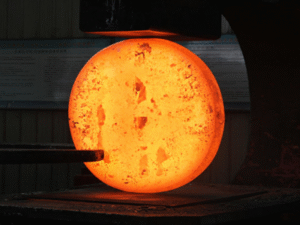
Enhancing Oxidation Resistance in High-Temperature Alloys: The Role of Advanced Coatings High-temperature alloys are critical materials used in various industrial applications, including aerospace, power generation, and automotive sectors. These alloys are designed to maintain their structural integrity and performance under extreme conditions of heat and stress. However, one of the primary challenges faced by these materials is oxidation, which can lead to degradation and failure. To address this issue, advanced coatings have emerged as a promising solution. These coatings serve as a protective barrier, preventing the alloy from coming into direct contact with oxygen and other corrosive elements. The effectiveness of these coatings largely depends on their composition, thickness, and application method. In recent years, significant advancements have been made in the development of these coatings, leading to improved oxidation resistance in high-temperature alloys. One key aspect of advanced coatings is their ability to form a stable, adherent layer on the alloy surface. This layer acts as a physical barrier, blocking oxygen and other reactive species from reaching the underlying material. The composition of the coating plays a crucial role in its performance. Materials such as ceramic compounds, metallic oxides, and hybrid coatings have been widely used due to their high thermal stability and resistance to chemical attack. Additionally, the thickness of the coating is critical. A thicker coating provides better protection, but it must be carefully controlled to ensure that it does not adversely affect the alloy’s mechanical properties. The application method of the coating also impacts its effectiveness. Techniques such as thermal spraying, electroplating, and chemical vapor deposition are commonly used to apply these coatings. Each method has its advantages and limitations, and the choice of method depends on the specific requirements of the application. In recent studies, the use of nanotechnology has further enhanced the performance of these coatings. Nanomaterials, such as nanoceria and nanosilica, have been incorporated into the coating formulations to improve their thermal stability and barrier properties. These nanomaterials can form a more uniform and dense layer, providing superior protection against oxidation. Moreover, the durability of the coating under cyclic loading and thermal cycling is another important consideration. High-temperature alloys often experience repeated heating and cooling, which can cause the coating to delaminate or degrade. To mitigate this issue, researchers have developed coatings with self-healing properties. These coatings can repair minor damages caused by thermal stress, maintaining their protective function over time. In conclusion, advanced coatings play a vital role in enhancing the oxidation resistance of high-temperature alloys. Their effectiveness depends on factors such as composition, thickness, and application method. With ongoing research and development, these coatings are becoming more advanced and durable, ensuring the long-term performance and reliability of high-temperature alloys in demanding applications.