
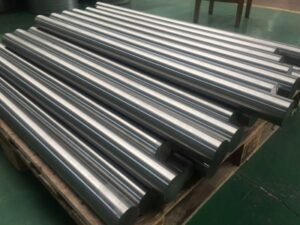
Processing high-temperature alloys presents a multitude of challenges that require careful consideration and advanced techniques. These materials are essential in various industries, including aerospace, automotive, and energy, due to their exceptional strength and durability at elevated temperatures. However, their complex composition and the demanding conditions they must withstand during processing make their fabrication a formidable task. One of the primary challenges is the formation of oxides and other contaminants on the surface of the alloys during heating. These oxides can weaken the material and lead to poor surface quality, which is critical for applications where precision and reliability are paramount. To mitigate this issue, engineers often employ protective atmospheres or coatings that prevent oxidation. Another significant challenge is the tendency of high-temperature alloys to exhibit poor machinability. The high strength and hardness of these materials make them difficult to cut, drill, or shape using conventional tools. As a result, specialized cutting tools and high-speed machining techniques are necessary to achieve the desired tolerances and finishes. Heat treatment is another critical aspect of processing high-temperature alloys. These materials often require precise control over temperature and time to develop their desired properties. Uneven heating or cooling can lead to warping, cracking, or other defects that compromise the integrity of the final product. Advanced heat treatment methods, such as controlled atmosphere furnaces and quenching systems, are employed to ensure uniform and consistent results. Additionally, the high thermal conductivity of these alloys can pose challenges during welding and joining processes. The rapid dissipation of heat can lead to incomplete fusion and weak joints. To address this, engineers may use preheating techniques or specialized welding consumables that match the properties of the alloys. The presence of alloying elements in high-temperature materials can also complicate processing. Elements such as chromium, nickel, and molybdenum enhance the performance of the alloys at high temperatures but can also make them more reactive and difficult to process. Understanding the behavior of these elements under various conditions is crucial for developing effective processing strategies. In summary, the challenges in processing high-temperature alloys are numerous and require a deep understanding of material science and engineering principles. From preventing surface contamination and improving machinability to controlling heat treatment and joining processes, each step must be carefully managed to produce materials that meet the stringent demands of modern applications. Advances in technology and innovative processing techniques continue to address these challenges, enabling the production of high-performance alloys for increasingly demanding industries.

 Spanish
  English
  German
  French
  Portuguese
  Japanese
  Russian
  Italian
  Arabic
  Korean