
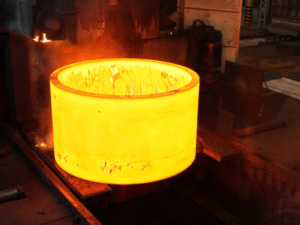
High creep strength alloys are specialized materials designed to maintain their structural integrity and performance under high temperatures and prolonged stress. These alloys are crucial in various industries where components are subjected to extreme conditions, such as aerospace, power generation, and automotive manufacturing. The primary characteristic of high creep strength alloys is their ability to resist deformation over time when exposed to high temperatures, which makes them indispensable for applications requiring durability and reliability. The properties of these alloys are determined by their chemical composition, microstructure, and processing techniques. Nickel-based, iron-based, and cobalt-based alloys are commonly used due to their excellent high-temperature resistance and mechanical strength. The addition of elements like chromium, molybdenum, and tungsten enhances the creep resistance of these alloys. Understanding the microstructural evolution during service conditions is essential for predicting the long-term behavior of these materials. Creep deformation occurs when a material is subjected to constant stress at elevated temperatures, leading to gradual and permanent deformation. High creep strength alloys are engineered to minimize this deformation through careful selection of alloying elements and control of the manufacturing process. Heat treatment plays a critical role in optimizing the properties of these alloys, as it can refine the grain structure and improve the overall strength and creep resistance. In addition to their high-temperature performance, these alloys must also exhibit good corrosion resistance and thermal stability. The applications of high creep strength alloys are diverse, ranging from turbine blades and discs in jet engines to heat exchanger components in nuclear power plants. These materials are also used in industrial furnaces and chemical processing equipment where high temperatures and mechanical stress are prevalent. The development of new high creep strength alloys continues to be an area of active research, with scientists and engineers focusing on improving performance, reducing costs, and expanding the range of applications. Advanced characterization techniques and computational modeling are employed to understand the mechanisms of creep deformation and to design alloys with enhanced properties. In conclusion, high creep strength alloys are vital materials for high-temperature applications, offering exceptional resistance to deformation and maintaining structural integrity over long periods. Their unique properties are achieved through precise alloy design, controlled manufacturing processes, and thorough understanding of their behavior under stress. As industries continue to push the boundaries of high-temperature operations, the demand for advanced creep-resistant materials will only grow, driving further innovation and development in this field.

 German
  English
  French
  Portuguese
  Japanese
  Russian
  Italian
  Spanish
  Arabic
  Korean