
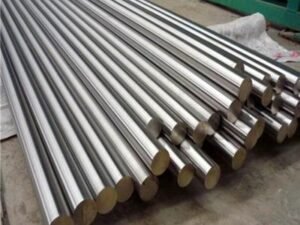
Titanium aluminum alloy is a sophisticated material that has gained significant attention in various industries due to its exceptional properties. This alloy combines the lightweight characteristics of aluminum with the high strength and corrosion resistance of titanium, making it an ideal choice for a wide range of applications. The unique combination of these elements results in a material that is both durable and versatile, capable of withstanding extreme conditions without compromising performance. One of the primary advantages of titanium aluminum alloy is its low density, which allows it to be used in applications where weight reduction is critical. This property makes it particularly suitable for the aerospace industry, where fuel efficiency and performance are paramount. In addition, the alloy’s high strength-to-weight ratio ensures that it can withstand significant stress and pressure, making it ideal for structural components in aircraft and spacecraft. The corrosion resistance of titanium aluminum alloy is another key benefit that sets it apart from other materials. Unlike traditional metals that can rust or corrode when exposed to moisture or chemicals, this alloy remains unaffected by harsh environmental conditions. This makes it an excellent choice for marine applications, such as ship hulls and offshore platforms, where exposure to saltwater and harsh weather can be detrimental to other materials. Furthermore, the alloy’s biocompatibility makes it suitable for medical implants and devices. The ability of titanium aluminum alloy to withstand extreme temperatures is also a significant advantage. It can maintain its structural integrity and performance in both high and low temperature environments, making it suitable for use in automotive engines, where heat resistance is crucial. The material’s thermal conductivity is another beneficial property, as it allows for efficient heat dissipation, which can help to prevent overheating in various applications. In terms of manufacturing, titanium aluminum alloy can be formed and processed using a variety of techniques, including casting, forging, and extrusion. This flexibility allows it to be used in the production of complex components that meet specific design requirements. The alloy’s machinability is also relatively high, which means that it can be easily shaped and finished to achieve the desired specifications. Despite its numerous advantages, titanium aluminum alloy does have some limitations. It is generally more expensive than traditional aluminum alloys, which can make it less cost-effective for some applications. Additionally, its high melting point can make welding and processing more challenging. However, ongoing research and development efforts are focused on overcoming these challenges and expanding the material’s applications. In conclusion, titanium aluminum alloy is a highly advanced material that offers a unique combination of properties, making it suitable for a wide range of industries. Its lightweight, high strength, corrosion resistance, and ability to withstand extreme temperatures make it an ideal choice for applications where performance and durability are essential. As technology continues to evolve, the use of titanium aluminum alloy is expected to grow, further solidifying its position as a material of choice for future innovations.

 German
  English
  French
  Portuguese
  Japanese
  Russian
  Italian
  Spanish
  Arabic
  Korean