
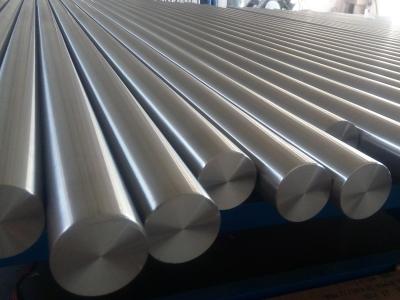
Lieferumfang für Aviation Group
Schmiedestücke, Rundstangen, Stahlplatten, Ringe, nahtlose Rohre, Stahlplatten/Stahlbänder, Kapillaren, Drahtschweißmaterial, bitte fragen Sie uns an!
Schmiedeteile aus Titan. Benutzerdefiniert
Titanstäbe gemäß den Zeichnungen. Φ(8-400) ×L≤5000mm (gewalzte Stäbe, geschmiedete Stäbe)
Titanblech/-band (0,3-60,0) × (400-1000) × (1000-3500) mm (kaltgewalztes Blech, warmgewalztes Blech)
Titan-Rohr Φ(3-210) × (0,2-10,0) ×L (gewalzte Rohre, extrudierte Rohre)
Titanring Außendurchmesser φ(100-1200) × Innendurchmesser Φ(100-1000) × Höhe (20-800) mm
Titan-Rundkuchen Φ(150-1200) × (20-800) mm
Titandraht Φ(0,1-7,0) ×L
1. Introduction to TA2/Gr2 materials
TA2/Gr2 is an industrial titanium, a single α phase. The commonly used industrial pure titanium in the industry is TA2, because of its moderate corrosion resistance and comprehensive mechanical properties. TA3 can be used when there are high requirements for wear resistance and strength. TA1 is available when better forming performance is required.
Titanium alloy is a new important structural material used in the aerospace industry. Its specific gravity, strength and operating temperature are between aluminum and steel, but its specific strength is high and has excellent anti-sea corrosion performance and ultra-low temperature performance. In 1950, the United States used it as a non-strength-bearing component such as the rear fuselage heat insulation plate, air guide cover, tail cover and other non-strength-bearing components on the F-84 fighter bomber for the first time. In the 1960s, the use of titanium alloys moved from the rear fuselage to the middle fuselage, and partially replaced structural steel to manufacture important bearing components such as partition frames, beams, flap slides. The amount of titanium alloy used in military aircraft has increased rapidly, reaching 20% to 25% of the aircraft’s structural weight.
Pure titanium is a silver-white metal that has many excellent properties. The density of titanium is 54g/cm3, 43% lighter than steel, and slightly heavier than the prestigious light metal magnesium. The mechanical strength is about the same as steel, twice as large as aluminum and five times as large as magnesium. Titanium is high temperature resistant, with a melting point of 1942K, nearly 1000K higher than gold and nearly 500K higher than steel. Titanium wire is made of titanium metal and is pulled into a filament shape through a special treatment process to become a titanium wire. The industrial pure titanium commonly used in industry is TA2, because of its moderate corrosion resistance and comprehensive mechanical properties. TA3 can be used when there are high requirements for wear resistance and strength. TA1 is available when better forming performance is required.
Industrial pure titanium is divided into three grades: TA1, TA2 and TA3 according to its impurity content. The gap impurity elements of these three industrial pure titanium gradually increase, and the mechanical strength and hardness also increase step by step, but the plasticity and toughness decrease accordingly.
2. Chemical composition of TA2/Gr2
| Markennummer | Chemische Inhaltsstoffe | |||||||
| TA2/Gr2 | Titanium (Ti) | Iron (Fe) | Carbon (C) | Nitrogen (N) | Hydrogen (H) | Oxygen (O) | Andere Verunreinigungen | |
| Marge | ≤0.30 | ≤0.10 | ≤0.05 | ≤0.015 | ≤0.25 | einzeln
≤0.10 |
Summe
≤0.40 |
|
3. Technical standards of TA2/Gr2 materials
GB/T3620.1-2016 Titan und Titanlegierungen und deren chemische Zusammensetzungen
GB/T 3621-2007 ASTM/B265 Bleche aus Titan und Titanlegierungen
GB/T2965 -2007 ASTM/B348 Stabmaterial aus Titan und Titanlegierungen
GB/T 3624-2010 ASTM337 Nahtloses Rohr aus Titan und Titanlegierungen
GB/T16598-2013 Rohre aus Titan und Titanlegierungen für ASTM381-Wärmetauscher und -Kondensatoren
GB/T13810-1997 Werkstoffe zur Verarbeitung von Titan und Titanlegierungen für chirurgische Implantate AMST/F136
GB/T3623-2007 AMST/B863 Draht aus Titan und Titanlegierungen
AMST/B265 ASTM/B265 Titan und Titanlegierungen Band-Folie
IV. TA2/Gr2 physikalische Eigenschaften
| Markennummer | Room temperature mechanical properties are not less than | High temperature mechanical properties are no less than | ||||||
| Tensile strength σb MPa | Yield strength σ0.2MPa | Elongation δ5% | Shrinkage ψ % | Impact value αk J/cm 2 | Test temperature ℃ | Tensile strength σb MPa | Long-lasting strength σ100 MPa | |
| Ta1 | 343 | 275 | 25 | 50 | — | |||
| TA2 | 441 | 373 | 20 | 40 | — | |||
| TA3 | 539 | 461 | 15 | 35 | — | |||
| Ta5 | 686 | — | 15 | 40 | 58.8 | |||
| Ta6 | 686 | — | 10 | 27 | 29.4 | 350 | 422 | 392 |
| TA7 | 785 | — | 10 | 27 | 29.4 | 350 | 490 | 441 |
| TC1 | 588 | — | 15 | 30 | 44.1 | 350 | 343 | 324 |
| TC2 | 686 | — | 12 | 30 | 39.2 | 350 | 422 | 392 |
| TC4 | 902 | 824 | 10 | 30 | 39.2 | 400 | 618 | 569 |
| TC6 | 981 | — | 10 | 23 | 29.4 | 400 | 736 | 667 |
| TC9 | 1059 | — | 9 | 25 | 29.4 | 500 | 785 | 588 |
| TC10 | 1030 | — | 12 | 25~30 | 34.3 | 400 | 834 | 785 |
| TC11 | 1030 | — | 10 | 30 | 29.4 | 500 | 686 | 588 |
V. 4. Characteristics of TA2/Gr2
Titanium has six major characteristics:
1. High strength: Titanium has better strength/density ratio than other metals, and can be made of titanium to make components with high strength, good rigidity and light weight. Titanium is used in the engine, frame, skin, fasteners and landing gear of aircraft.
2. Anti-corrosion: Compared with stainless steel, titanium alloy has better corrosion effect in humid air and seawater, and titanium has great resistance to pit corrosion, acid corrosion and stress corrosion. Titanium resists corrosion of alkali, chloride, chlorinated organic matter, sulfuric acid, nitric acid.
3. High temperature resistance: The application temperature of titanium is higher than that of aluminum alloy. Titanium can work for a long time at 450-500℃.
4. Low temperature resistance: When working at low temperature or ultra-low temperature conditions, titanium alloys still have their mechanical properties. Titanium alloys with low temperature resistance and extremely low gap still have good ductility, so titanium alloys are a good low temperature structural material.
5. Environmentally friendly metals: Titanium has lower thermal conductivity than carbon steel or copper, but titanium has very good corrosion resistance. Therefore, the thickness of titanium can be greatly reduced, and the heat exchange mode is dropwise condensation between titanium and steam. This mode reduces heat transfer resistance and there is no scaling on the titanium surface, thus making the titanium more thermal conductivity.
6. Good thermal conductivity: Titanium is a non-magnetic metal and cannot be magnetized in large magnetic fields. Moreover, titanium is non-toxic and compatible with blood, so titanium has been used in the medical field.
V. TA2/Gr2 Anwendungsbereiche
- Used to make airplane engine compressor parts;
- Used to manufacture rockets, missiles and aircraft structural parts, aircraft skeletons, skins, engine components, beams, etc.;
- Pipeline systems, valves, and pumps that are corroded by marine seawater;
- Power station condensers, accelerators for petroleum refining and seawater desalination, and environmental pollution control devices, etc.
- Chemical heat exchanger, pump body, distillation tower.

 German
  English
  French
  Portuguese
  Japanese
  Russian
  Italian
  Spanish
  Arabic
  Korean