
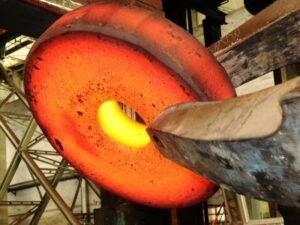
Automotive turbine high-temperature alloys are engineered materials specifically designed to withstand the extreme conditions within automotive turbines. These alloys are critical components in modern internal combustion engines, particularly in turbochargers and superchargers, where they operate at temperatures exceeding 1000 degrees Celsius. The primary function of these alloys is to ensure the durability and efficiency of the turbine blades, which are subjected to constant thermal stress, mechanical loads, and chemical erosion. The composition of automotive turbine high-temperature alloys typically includes nickel, chromium, and iron, with additional elements such as molybdenum, tungsten, and cobalt to enhance their high-temperature performance. These materials exhibit exceptional strength and resistance to creep, a phenomenon where materials deform under prolonged exposure to high temperatures. Furthermore, they possess high thermal conductivity, which helps in dissipating heat and maintaining structural integrity. The applications of automotive turbine high-temperature alloys are not limited to turbochargers. They are also utilized in other high-performance engine components, such as exhaust manifolds and spark plugs, where similar extreme conditions are encountered. The development of these alloys has been driven by the continuous demand for improved engine efficiency and reduced emissions. As vehicles become more fuel-efficient, the operating temperatures of turbine components increase, necessitating the use of advanced materials. The properties of automotive turbine high-temperature alloys make them indispensable in the pursuit of higher performance and sustainability in automotive engineering. The future of these alloys lies in their ability to withstand even higher temperatures and stresses, thereby enabling the design of more powerful and efficient engines.

 German
  English
  French
  Portuguese
  Japanese
  Russian
  Italian
  Spanish
  Arabic
  Korean