
High-temperature alloys represent a critical class of materials engineered to maintain mechanical integrity and corrosion resistance under extreme thermal conditions. These alloys, primarily composed of nickel, cobalt, iron, and various refractory elements, form the backbone of modern aerospace, energy, and industrial applications where conventional materials would rapidly degrade. The performance optimization of these materials relies heavily on precise aging treatment and processing methodologies that manipulate their microstructural characteristics.
The aging treatment of high-temperature alloys involves a carefully controlled thermal process that precipitates hardening phases within the alloy matrix. This process typically follows solution treatment, where the alloy is heated to dissolve soluble alloying elements, followed by rapid cooling to form a supersaturated solid solution. Subsequent aging at specific temperatures for defined durations allows for the controlled precipitation of secondary phases such as gamma prime (γ’) in nickel-based superalloys, which significantly enhances strength and creep resistance. 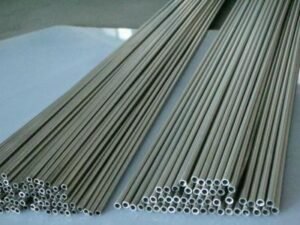
Processing parameters during aging treatment must be meticulously controlled to achieve optimal microstructural characteristics. Temperature variations of even a few degrees can precipitate different phases or alter precipitate size distribution, consequently affecting mechanical properties. The duration of aging treatment directly influences precipitate morphology, with longer times typically resulting in coarser precipitates that may improve certain properties while potentially compromising others. Modern manufacturing facilities employ sophisticated thermal cycling systems to maintain precise temperature control throughout the aging process.
The mechanical properties of high-temperature alloys are profoundly influenced by aging treatment procedures. Properly aged alloys exhibit superior tensile strength, fatigue resistance, and creep performance compared to their as-cast or solution-treated counterparts. The precipitates formed during aging act as barriers to dislocation movement, thereby impeding plastic deformation at elevated temperatures. However, excessive aging can lead to precipitate coarsening or undesirable phase transformations, resulting in property degradation. Therefore, determining the optimal aging parameters represents a critical aspect of alloy development.
Industrial processing of high-temperature alloys must account for various factors that influence aging effectiveness. Component geometry affects heat transfer characteristics during thermal treatment, necessitating adjusted processing times for complex geometries. Surface preparation prior to aging treatment significantly impacts nucleation of precipitates and subsequent property development. Additionally, cooling rates following aging treatment can influence residual stress distributions and final microstructural characteristics, requiring careful control in industrial applications.
The application of advanced aging treatment techniques continues to evolve, with researchers exploring novel approaches such as multi-stage aging, interrupted aging, and thermo-mechanical processing to further enhance alloy performance. These innovations aim to achieve more uniform precipitate distributions, improved thermal stability, and enhanced resistance to environmental degradation. As operating temperatures in demanding applications continue to increase, the development of sophisticated aging treatment and processing methodologies remains essential for pushing the performance boundaries of high-temperature alloys.

 German
  English
  French
  Portuguese
  Japanese
  Russian
  Italian
  Spanish
  Arabic
  Korean