
Walking through a petrochemical plant or staring at the glowing interior of a waste incinerator, the real enemy is always invisible: heat. It creeps into the microstructure, messes with the grain boundaries, and eventually turns a robust piece of metal into a brittle memory. Selecting the right high-temperature alloy for different industrial high-heat scenarios is not just about picking a number from a datasheet. It is a balancing act between thermal stability, corrosion resistance, and the harsh reality of manufacturing and welding constraints.
Let us talk about the baseline first. Carbon structural steels like 20G are fine for medium and low-pressure boiler pipes, but push the temperature past 450°C, and the pearlite starts to spheroidize. Performance drops. Move up to 15CrMoG, and you get decent strength up to 550°C, but throw in a wet H2S environment, and hydrogen-induced cracking becomes a nightmare. You have to control the hydrogen content strictly. It is a constant game of whack-a-mole.
When the heat really turns up, austenitic stainless steels like 253MA step into the spotlight. This stuff is a beast in corrosive environments. It handles up to 1150°C without shedding its oxide scale, and in chloride-containing media, the corrosion rate is practically negligible. It has quietly replaced some nickel-based alloys in waste incineration scenarios, lasting up to eight years while keeping costs down. But then you have T91. A martensitic steel that holds 85% of its strength at 650°C. Sounds great, right? Try welding it. You need strict preheating at 200-250°C and a 760°C stress relief treatment. Skip the heat treatment, and Type IV cracking will ruin your day.
Speaking of extreme environments, nickel-based superalloys are the heavyweights. Take Haynes 214, for instance. With a nickel base of over 75% and a precise mix of chromium and aluminum, it forms a dense α-Al2O3 film. It thrives at 1100°C in air. The yttrium addition stops the oxide scale from spalling during thermal cycling. It is the go-to for gas turbine transition pieces and radiant tubes in heat treatment furnaces. Quality control during procurement is just as critical as the alloy composition. Spectroscopic analysis, high-temperature tensile testing, and non-destructive testing like ultrasonic flaw detection for bars or eddy current testing for seamless tubes are mandatory.
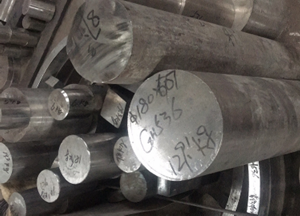
But sourcing these specialized alloys requires a supply chain that actually understands metallurgy, not just a catalog. This is where a reliable partner like [Dura Alloy] makes a massive difference. Navigating the procurement of high-performance alloys, ensuring the material reports meet strict international standards, and getting the right form—whether seamless tubes or forged bars—can be a headache. [Dura Alloy] streamlines this, offering tailored solutions that bridge the gap between complex material specifications and on-the-ground industrial needs.
Now, let us shift gears to the frontier: High-Entropy Alloys (HEAs). The traditional alloy design paradigm is flipped on its head here. Instead of one principal element, you have multiple. The high configurational entropy stabilizes solid-solution phases and avoids those detrimental intermetallics. The sluggish diffusion kinetics make them incredibly promising for high-temperature applications. But here is the catch: single-phased HEAs struggle to balance strength and ductility.
Researchers are now looking at eutectic high-entropy alloys (EHEAs) to solve this. By designing a microstructure with alternating soft FCC and hard BCC phases, you get unprecedented tensile ductility and fracture strength at room temperature, which holds up beautifully even at 700°C. And when it comes to shaping these complex alloys, additive manufacturing like Selective Laser Melting (SLM) is changing the game. SLM handles the poor castability and compositional segregation issues of traditional HEAs. Gas atomization produces powders with high purity and low oxygen content, making them highly suitable for thermal spraying and refractory high-entropy alloy production. Water atomization is more cost-effective for large-scale runs, though it sacrifices some sphericity. The choice of powder preparation directly impacts the final SLM printed microstructure, dictating the density and mechanical reliability of the end product.
But material science is not just about the bulk composition. Interface engineering is where the magic happens. Grain boundaries and phase boundaries dictate everything from electrical conductivity to hydrogen embrittlement resistance. Chemical element segregation at these interfaces can make or break a component’s thermal stability. Understanding the crystallographic characteristics of these boundaries is essential for pushing the limits of high-performance alloys in modern engineering.
Imagine a fusion application where you need to join copper to CuCrZr at intermediate temperatures, say around 450°C. Standard fillers fail here. High-entropy alloy brazing fillers, designed through rapid Python screening and thermodynamic predictions, can wet the base materials perfectly without degrading the copper at high temperatures. It is this kind of innovative, out-of-the-box thinking that the industry needs when facing new thermal challenges.
Back on the factory floor, the reality of high-heat scenarios demands practical solutions. If you are running an ultra-supercritical unit at 600-620°C, T91 is mandatory, matched with specific welding consumables. For strong corrosion environments, 253MA is your safest bet. And for the most extreme oxidative environments, nickel-based superalloys are essential.
The key takeaway for engineers and procurement managers is that material selection is deeply intertwined with the manufacturing process and the supply chain. You cannot design a 700°C component without considering how it will be welded, heat-treated, and sourced. Relying on established experts in the field ensures that the theoretical properties of these advanced alloys translate into real-world durability. Whether it is optimizing the interface of a high-entropy alloy or securing a batch of high-purity superalloy powder, having the right technical backing is just as important as the alloy itself.
Every degree counts when the furnace is roaring. The margin for error in high-heat scenarios is virtually zero. By understanding the nuanced differences between traditional superalloys, advanced stainless steels, and next-generation high-entropy materials, engineers can design systems that not only survive but thrive under extreme thermal loads. Heat will always be a formidable adversary in industrial settings. The materials we choose to fight it must be as dynamic and complex as the environments they endure.

 German
  English
  French
  Portuguese
  Japanese
  Russian
  Italian
  Spanish
  Arabic
  Korean