
Wear-resistant high-temperature alloy forgings represent a critical component in numerous industrial applications where materials must withstand extreme conditions. These specialized metal components are engineered to maintain structural integrity and performance under high temperatures, heavy loads, and abrasive environments. The manufacturing process involves carefully selected alloy compositions that typically include nickel, cobalt, chromium, and other elements known for their superior thermal stability and resistance to wear.
The production of these alloy forgings begins with precise material selection based on the intended application environment. Manufacturers consider factors such as operating temperature ranges, exposure to corrosive substances, mechanical stress requirements, and expected service life. The selected alloys undergo rigorous testing to verify their chemical composition and mechanical properties before entering the forging process. During forging, the metal is heated to optimal temperatures and shaped through controlled deformation processes that enhance its grain structure and mechanical characteristics.
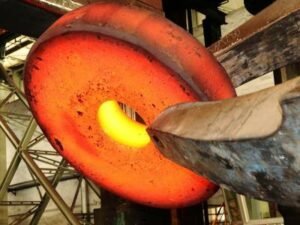
The resulting forged components exhibit superior material properties compared to cast or machined alternatives. The forging process refines the grain structure, eliminates internal voids, and improves directional strength characteristics. These properties make wear-resistant high-temperature alloy forgings particularly valuable in aerospace, power generation, oil and gas, and automotive industries. Components such as turbine blades, valve seats, bearing housings, and structural elements benefit significantly from the enhanced performance characteristics achieved through advanced forging techniques.
Heat treatment processes further enhance the properties of these specialized alloys. Through controlled heating and cooling cycles, manufacturers can optimize the microstructure to achieve desired hardness, toughness, and thermal resistance characteristics. Surface treatments may also be applied to improve wear resistance and extend service life in the most demanding applications.
The selection criteria for wear-resistant high-temperature alloy forgings depend heavily on specific application requirements. Engineers must consider factors such as thermal expansion coefficients, thermal conductivity, oxidation resistance, and creep strength when specifying materials for particular applications. The cost-effectiveness of these components must be balanced against their extended service life and reduced maintenance requirements in critical systems.
As industrial processes continue to demand higher operating temperatures and more aggressive conditions, the development of advanced wear-resistant high-temperature alloy forgings remains an active area of materials research. Ongoing improvements in alloy composition, forging techniques, and heat treatment processes continue to expand the capabilities and applications of these essential industrial components.

 Arabic
  English
  German
  French
  Portuguese
  Japanese
  Russian
  Italian
  Spanish
  Korean