
The performance of high-temperature alloys in demanding applications such as gas turbines, nuclear reactors, and aerospace components depends critically on achieving an optimal balance between strength and toughness. These two mechanical properties often present a trade-off relationship, where increasing one typically comes at the expense of the other. Understanding the fundamental mechanisms governing this balance and implementing appropriate strategies to optimize both properties simultaneously is essential for advancing high-temperature alloy technology.
Strength in high-temperature alloys primarily refers to their resistance to deformation under load at elevated temperatures, characterized by properties such as yield strength, tensile strength, and creep resistance. Toughness, on the other hand, represents the material’s ability to absorb energy and resist fracture, often measured by impact toughness or fracture toughness. The challenge lies in developing alloys that maintain high strength while also possessing sufficient toughness to prevent catastrophic failure under unexpected loading conditions or thermal shocks.
The strength-toughness relationship in high-temperature alloys is governed by several microstructural factors. Grain size plays a crucial role, as finer grains generally improve strength through the Hall-Petch relationship but may reduce toughness by providing more grain boundaries that can act as crack initiation sites. Similarly, precipitate phases that enhance strength through precipitation hardening can also act as stress concentrators that promote crack propagation.
One effective approach to balancing strength and toughness involves controlling the alloy’s microstructure through careful composition design and processing. The addition of alloying elements such as chromium, nickel, cobalt, and refractory metals can influence both properties. For instance, elements that promote the formation of coherent precipitates can enhance strength without significantly compromising toughness. Additionally, elements that segregate to grain boundaries can improve intergranular cohesion, thereby enhancing toughness.
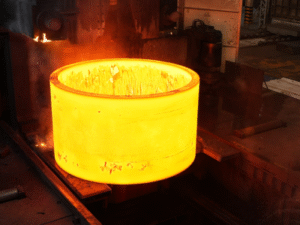
Thermomechanical processing represents another critical strategy for achieving the desired balance. Techniques such as hot working, controlled cooling rates, and multi-stage heat treatments can refine the microstructure and optimize the distribution of strengthening phases. For example, thermo-mechanical processing can produce a bimodal grain structure that combines fine grains for strength with coarse grains for toughness. Similarly, controlled cooling can promote the formation of beneficial precipitates while avoiding detrimental phases.
Heat treatment parameters significantly impact the strength-toughness balance in high-temperature alloys. Solution heat treatment followed by precise aging schedules can optimize precipitate size, distribution, and coherency. Over-aging typically reduces strength but can improve toughness by coarsening precipitates and reducing their effectiveness as crack initiation sites. Conversely, under-aging maximizes strength but may result in reduced toughness due to the presence of numerous small, hard precipitates.
Grain boundary engineering offers another promising approach to improve both strength and toughness. By controlling the character and distribution of grain boundaries, it is possible to enhance resistance to intergranular cracking while maintaining high strength. Techniques such as thermomechanical processing with specific strain paths can increase the fraction of low-angle grain boundaries and special grain boundaries that resist crack propagation.
Nanostructured high-temperature alloys represent an emerging approach to overcome the traditional strength-toughness trade-off. By introducing nanoscale precipitates or grain structures, these alloys can achieve exceptional strength while maintaining reasonable toughness through mechanisms such as crack deflection, bridging, and nanoscale plasticity. However, the stability of such nanostructures at elevated temperatures remains a significant challenge.
Surface modification techniques can also contribute to balancing bulk properties with surface characteristics. Techniques such as shot peening, laser shock peening, or surface nitriding can introduce beneficial compressive residual stresses that improve fatigue resistance without compromising bulk toughness. Similarly, diffusion coatings can enhance oxidation and corrosion resistance, thereby indirectly improving the effective toughness by preventing surface degradation.
Computational modeling and advanced characterization techniques have revolutionized the development of high-temperature alloys with optimized strength-toughness balance. Phase field modeling and molecular dynamics simulations can predict microstructural evolution during processing and service, enabling the design of alloys with tailored properties. Advanced characterization techniques such as three-dimensional atom probe tomography and high-resolution electron microscopy provide detailed insights into microstructural features that influence mechanical behavior.
The industrial implementation of high-temperature alloys with optimized strength-toughness balance requires careful consideration of service conditions and failure modes. For applications involving thermal cycling, alloys with improved thermal fatigue resistance are essential, which typically involves optimizing both strength and toughness to resist crack initiation and propagation. In contrast, components subjected to sustained high loads may prioritize creep resistance, which often requires different microstructural strategies.
Future research directions in high-temperature alloys with balanced strength and toughness include the development of novel alloy compositions with improved intrinsic properties, advanced processing techniques for microstructural control, and innovative heat treatment strategies. Additionally, the integration of computational materials design with experimental validation promises to accelerate the development of next-generation high-temperature alloys with optimized performance characteristics.
In conclusion, achieving an optimal balance between strength and toughness in high-temperature alloys requires a comprehensive understanding of microstructure-property relationships and the implementation of sophisticated metallurgical strategies. Through careful alloy design, processing optimization, heat treatment control, and advanced characterization, it is possible to develop high-temperature alloys that excel in both strength and toughness, enabling reliable performance in the most demanding applications.

 Arabic
  English
  German
  French
  Portuguese
  Japanese
  Russian
  Italian
  Spanish
  Korean