
High-temperature alloys and heat-resistant steel both serve critical roles in industries where materials must perform under extreme thermal conditions. While these materials share some similarities in their ability to withstand elevated temperatures, they differ significantly in composition, performance characteristics, and application suitability. Understanding these differences is essential for engineers and material scientists when selecting appropriate materials for specific high-temperature applications.
Heat-resistant steel primarily refers to carbon and low-alloy steels that have been formulated to maintain strength and resist degradation at elevated temperatures. These steels typically contain elements like chromium, molybdenum, and vanadium which enhance their thermal stability. The chromium content generally ranges from 5% to 12%, providing sufficient oxidation resistance while keeping material costs relatively low. Heat-resistant steels are widely used in boiler components, exhaust systems, and furnace structures where temperatures typically do not exceed 800°C. Their mechanical properties remain adequate in this range, though they may experience rapid degradation if exposed to higher temperatures for extended periods.
In contrast, high-temperature alloys represent a more advanced class of materials engineered specifically for extreme conditions. These alloys typically contain a higher percentage of alloying elements including nickel, cobalt, chromium, and various refractory metals such as tungsten, molybdenum, and tantalum. The nickel content often exceeds 50% in superalloys, creating a stable austenitic matrix that maintains integrity at temperatures exceeding 1000°C. The microstructure of these alloys often includes precipitates like gamma prime (γ’) or carbides that impede dislocation movement, thereby preserving mechanical strength at elevated temperatures.
The temperature capability between these materials represents one of the most significant distinctions. While heat-resistant steels typically begin to lose mechanical properties rapidly above 800°C, high-temperature alloys can maintain structural integrity in environments exceeding 1100°C. This superior performance is particularly evident in applications involving thermal cycling, where high-temperature alloys demonstrate better resistance to thermal fatigue due to their more stable microstructure and lower coefficient of thermal expansion.
From a manufacturing perspective, heat-resistant steels offer advantages in terms of weldability and machinability compared to many high-temperature alloys. The latter often require specialized processing techniques due to their complex compositions and high strength at elevated temperatures. However, the long-term performance benefits of high-temperature alloys frequently justify the additional processing costs in critical applications.
The corrosion resistance profiles also differ considerably between these materials. Heat-resistant steels rely primarily on chromium oxide layers for protection, which may become unstable in certain environments. High-temperature alloys often incorporate additional elements like aluminum and titanium to form more stable oxide layers, providing superior resistance to both oxidation and hot corrosion in aggressive atmospheres.
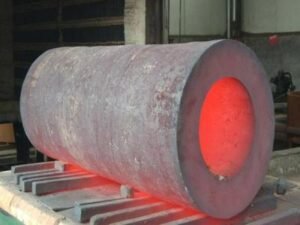
When evaluating these materials for specific applications, factors beyond temperature capability must be considered. High-temperature alloys generally offer better creep resistance, fatigue strength, and microstructural stability over extended service periods. However, their higher initial material and processing costs may not be justified in applications where peak temperatures remain within the capability range of heat-resistant steels. The decision ultimately depends on the specific temperature requirements, mechanical property needs, environmental conditions, and economic considerations of the intended application.
In conclusion, while both heat-resistant steels and high-temperature alloys serve important functions in high-temperature applications, they represent distinct material classes with different capabilities. Heat-resistant steels provide a cost-effective solution for moderate temperature applications, whereas high-temperature alloys offer superior performance in extreme environments where material integrity is critical. Understanding these differences enables more informed material selection, optimizing both performance and cost-effectiveness in high-temperature engineering applications.

 Arabic
  English
  German
  French
  Portuguese
  Japanese
  Russian
  Italian
  Spanish
  Korean