
Precision forging represents a critical manufacturing process for producing high-temperature alloys with exceptional mechanical properties and dimensional accuracy. High-temperature alloys, including nickel-based, cobalt-based, and iron-based superalloys, are essential components in aerospace, power generation, and chemical processing industries where materials must withstand extreme conditions. The precision forging process involves carefully controlled deformation of metal workpieces at elevated temperatures to achieve desired shapes and microstructures.
The precision forging process begins with material selection and preparation. High-temperature alloys typically contain multiple alloying elements such as chromium, cobalt, tungsten, and molybdenum, which contribute to their superior strength, creep resistance, and oxidation resistance at elevated temperatures. The raw material is heated to specific temperatures within the austenitic range to optimize formability while minimizing grain growth and surface oxidation.
During the forging operation, the heated alloy workpiece is placed between precisely shaped dies that apply controlled pressure through hydraulic or mechanical presses. The dies are designed with exceptional accuracy, often featuring surface finishes of Ra 0.2 micrometers or better to ensure dimensional precision of the final product. The forging process typically occurs in multiple stages, with intermediate reheating steps to maintain material ductility and prevent cracking.
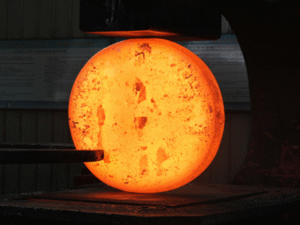
The advantages of precision forging for high-temperature alloys include improved mechanical properties through grain refinement, enhanced fatigue life, and reduced material waste compared to conventional machining processes. The process also produces components with superior surface finish and dimensional accuracy, often eliminating the need for extensive secondary operations.
Temperature control represents a critical parameter in high-temperature alloy precision forging. The workpiece must be maintained within a specific temperature range to achieve optimal microstructural development while preventing excessive grain growth or phase transformations. Advanced thermal imaging systems and pyrometers are employed to monitor and maintain precise temperature control throughout the forging cycle.
Post-forging heat treatment is essential for developing the final microstructure and mechanical properties of high-temperature alloys. Solution treatment followed by precipitation aging is commonly employed to maximize strength, creep resistance, and thermal stability. The heat treatment parameters must be carefully controlled to avoid distortion while achieving the desired phase distribution and precipitate morphology.
Quality assurance in precision forging of high-temperature alloys involves comprehensive non-destructive testing methods including ultrasonic testing, eddy current inspection, and fluorescent penetrant examination. Dimensional verification is conducted using coordinate measuring machines with sub-micron accuracy to ensure compliance with stringent aerospace and industrial specifications.
The continued advancement in precision forging technology, including the development of advanced die materials, improved process control systems, and sophisticated simulation software, enables the production of increasingly complex high-temperature alloy components with enhanced performance characteristics. As demands for higher operating temperatures and improved efficiency continue to grow, precision forging will remain a vital manufacturing process for high-temperature alloys across multiple industries.

 Arabic
  English
  German
  French
  Portuguese
  Japanese
  Russian
  Italian
  Spanish
  Korean